

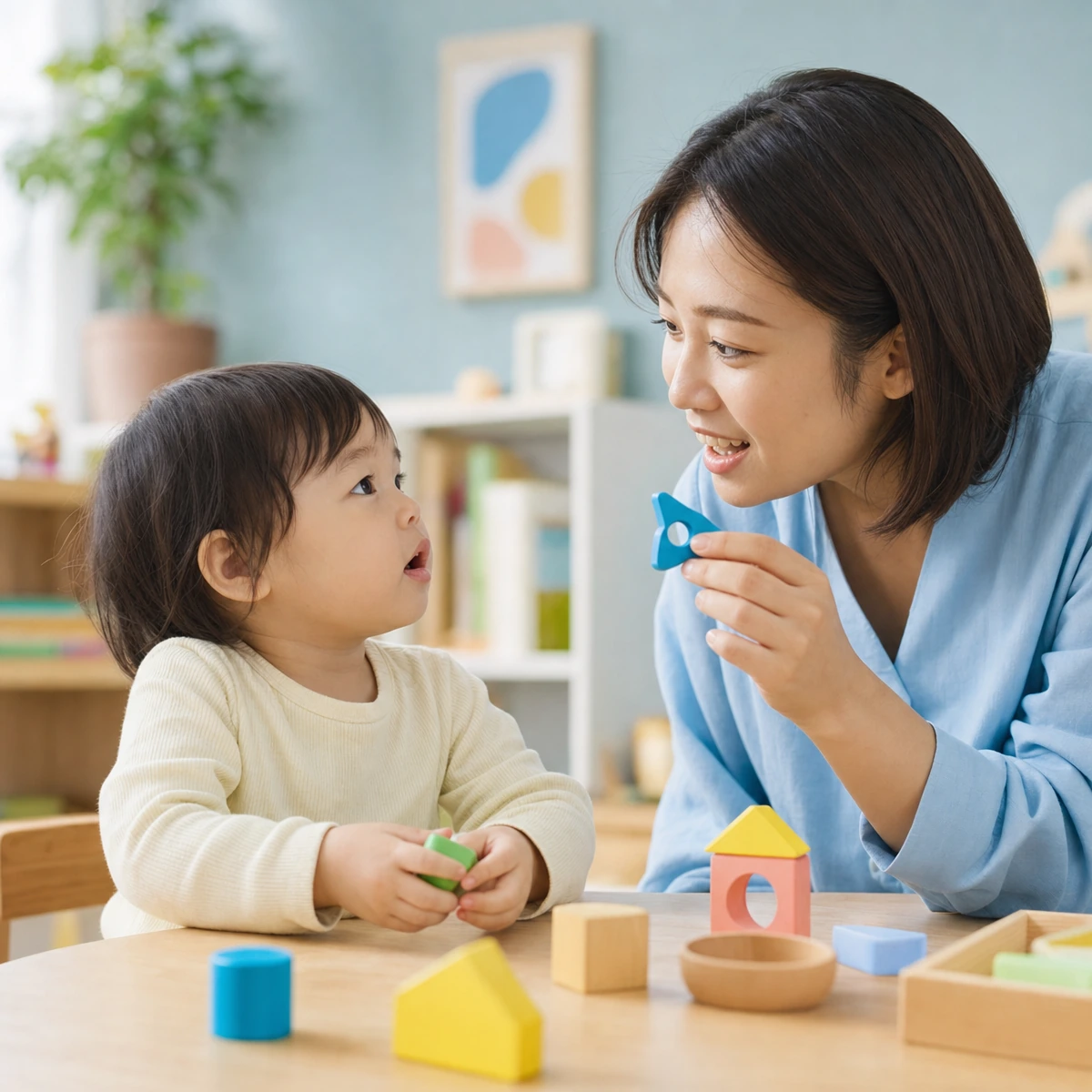
A 2- or 3-year-old has a speech delay when their spoken language falls behind what most children their age can say. By age 2, a typically developing toddler uses at least 50 words and combines two words (such as “more milk”). About 10-15% of toddlers are late talkers. Some catch up on their own, while others benefit from early speech therapy. Here’s why your child may not be talking yet, what is typical, and when to take action.
Key takeaways
- Most children say their first word at around 12 months old.
- A 2- or 3-year-old who is not yet talking likely has a communication delay and should receive a speech evaluation. Early intervention can make a big difference.
- A toddler may be nonverbal for several reasons, including hearing problems, oral-motor difficulties, or a developmental condition such as autism. Sometimes, however, a speech delay has no known cause.
- A child who understands everything but uses few words may have an expressive language delay.
- You can help your child talk more at home through activities such as playing, reading together, and encouraging imitation.
Free 30-minute evaluation
Looking for a speech therapist?
Talk through what you are noticing and get clear next steps.
Book free evaluation
What is a speech delay?
A speech delay means a child is developing speech skills more slowly than expected for their age. In toddlers and young children, this usually involves using far fewer words than their peers, struggling to form two-word phrases such as “my ball,” or being difficult to understand.
A speech delay is about timing, and it is not the same as a speech disorder. Many children with delayed speech catch up with support, and early intervention leads to the best outcomes.
Why isn’t my 2- or 3-year-old talking?
Families often ask us, “Is it normal for my 2-year-old not to talk?” or “Should I worry if my 3-year-old is babbling but not talking?” It is natural to be concerned, but there is a lot you can do to help. Whether your toddler understands you but does not speak, babbles more than talks, or has prompted questions about autism, you can work through the next steps one at a time.
If your 2- or 3-year-old is not talking yet, it may point to a speech or language delay. A speech delay does not necessarily mean something is “wrong,” but it is a reason to look more closely at your child’s communication development.
Keep in mind that toddlers do not all develop on the same schedule. Some are late talkers who eventually catch up without intervention. Others benefit from early support as they build communication skills.
Sometimes, not talking by age 2 or 3 is related to an underlying condition. For example, hearing problems, autism spectrum disorder, and oral-motor challenges can affect a child’s ability to speak clearly or consistently. We discuss each of these below. Speech delays can also occur without any other diagnosis.
My toddler understands everything but isn’t talking
If your 2- or 3-year-old is not using words but seems to understand everything, their receptive language, meaning their understanding of spoken language, may be developing well. Hamshi Ganjam, an Astrel speech therapist, explains that the child may have an expressive language delay. “An expressive language delay means that the way a child communicates and speaks is not meeting age-expected norms,” she says.
With early attention and appropriate support, most children with language delays make excellent progress. Next, let’s review when children typically begin talking and which signs may indicate a delay.
When do children typically start talking?
Most babies say their first words at around 12 months old. Some start a little earlier, while others need more time. Every child develops differently.
Before children begin talking, they must develop several foundational communication skills. Speech and language are like a staircase, with each step building on the one before it.
Early milestones that usually come before talking include:
- Babbling (such as “ba-ba” or “da-da”)
- Using gestures (such as pointing, waving, or lifting their arms to be picked up)
- Imitating sounds, actions, or facial expressions
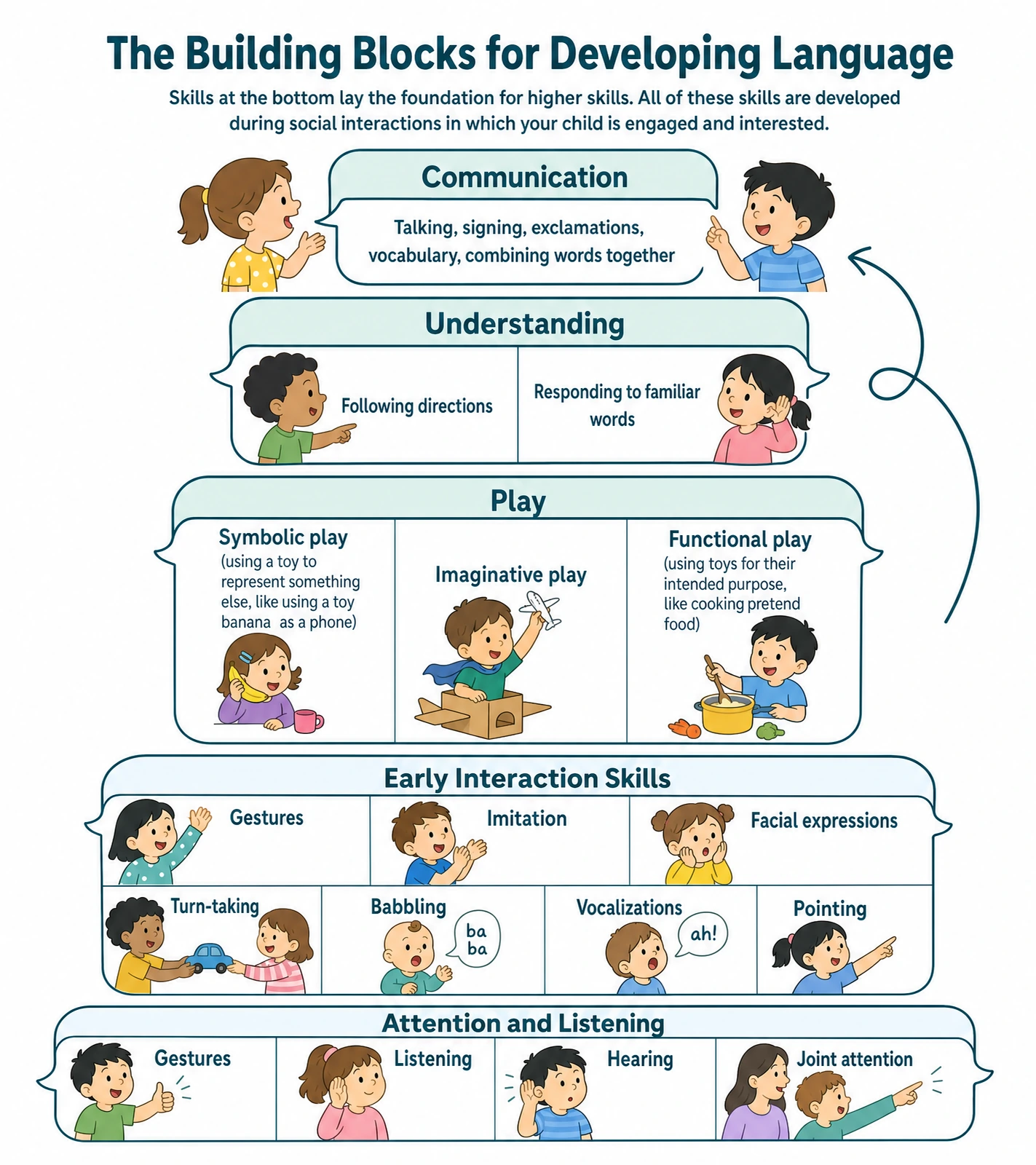
A 2- or 3-year-old who is not talking may still be developing one or more of these earlier skills. You might notice that your 2-year-old babbles without talking, or that your toddler understands what you say but does not speak. These details provide useful clues and can help guide what you do next.
Speech and language milestones by age
Here is a quick overview of key toddler speech milestones and possible signs of delay at each age.
12 months
- Typical development: Says a first word, babbles conversationally, responds to their name, and understands “no”
- Signs of possible speech delay: Does not babble, respond to their name, or use gestures such as waving
18 months
- Typical development: Says 10-20 words or more, points to body parts, and follows simple one-step directions such as “Bring me your ball”
- Signs of possible speech delay: Says fewer than 10 words, does not imitate other people, or does not engage in pretend play
2 years
- Typical development: Says 50 words or more, combines two words such as “more juice” or “Daddy go,” and is understood by parents about 50% of the time
- Signs of possible speech delay: Says fewer than 50 words, does not use two-word phrases, or is understood less than 25% of the time
3 years
- Typical development: Uses 3- to 4-word sentences, is understood by strangers about 75% of the time, and asks questions
- Signs of possible speech delay: Uses phrases shorter than 3 words, is understood by strangers less than half the time, or has difficult-to-understand speech that is not improving
Late talker vs. speech delay: What is the difference?
Parents often use “late talker” and “speech delay” to mean the same thing. Speech therapists, however, use the terms differently.
A late talker is generally a child between 18 and 30 months whose development is typical in every area except talking. The child understands what others say, plays with toys, points and uses other gestures, and reaches other milestones on time. They simply are not using many spoken words yet. About 10% to 15% of toddlers are considered late talkers.
Speech delay is a broader term for any child whose expressive speech is behind expected milestones. A child with a speech delay may have other challenges, including trouble following directions, limited eye contact, or delayed motor skills.
A late talker is generally a child between 18 and 30 months whose development is typical in every area except talking.
The main distinction is that a late talker has delayed speech without other concerning signs. A speech delay may be associated with a broader developmental issue, such as autism, hearing loss, or a language disorder.
Should you wait or take action? Research indicates that about half of late talkers catch up on their own by age 3 or 4. However, it is difficult to predict which children will catch up and which will not. Most speech therapists recommend an evaluation by age 2 if a child is not using at least 50 words or combining two words into phrases. It is better to seek help sooner rather than later.
Why might a 2- or 3-year-old be nonverbal?
Toddlers may not be talking for many reasons. Some causes are temporary and straightforward to support, while others require closer attention.
Common reasons a toddler may be nonverbal include:
Hearing problems
When a child has difficulty hearing, learning to talk may also be difficult.
- They may not hear every sound clearly or may miss parts of words.
- This can make imitating speech and learning new vocabulary more difficult.
If your child is not talking yet, arrange a hearing test early to rule out hearing loss.
Oral-motor difficulties
Some children have difficulty moving their lips, tongue, or jaw in the ways needed for speech.
- This may occur with a condition such as childhood apraxia of speech, which affects the brain’s ability to plan and coordinate speech movements.
- A child may know what they want to say but struggle to produce the words clearly.
Autism
A speech delay is sometimes one of several early signs of autism spectrum disorder. Autistic children may also communicate socially in different ways. For example, they may make limited eye contact or may not consistently respond to their name. If you are wondering whether your child’s speech delay could be related to autism, our speech delay vs. autism guide compares the key differences side by side.
Neurological problems
Some medical conditions affecting the brain or muscles can influence speech development. These include cerebral palsy, muscular dystrophy, and traumatic brain injury. Such conditions can affect a child’s control of the muscles required for speech.
Limited exposure to language or play
Children learn to talk by listening to and interacting with other people throughout the day.
- If a child has too few opportunities to play, hear language, or interact with caregivers, their speech development may slow down.
- Excessive screen time can also displace valuable face-to-face communication.
Developmental delays without a known cause
Sometimes, there is no clear reason for a child’s speech delay. Their development may be slower in this one area even though other skills appear to be on track. These children often make excellent progress with early intervention and support.
Related guides





How can I tell if my toddler needs speech therapy?
It is understandable to wonder whether your toddler is on track, especially when other children the same age seem to be chatting away. If your child is 15 months old and has not said any words, it is a good idea to consult a speech-language pathologist. If your 2- or 3-year-old is not talking at all, or says only a few words, it is time to seek help.
“Even if your toddler isn’t talking but understands what you say, or they’re babbling but not using real words, an early speech evaluation can make a big difference,” says Ganjam. A speech therapist can assess how your child communicates and help you determine the best next steps.
For a detailed explanation of when speech therapy may be needed at each age, from 3 months through 4 years, read our guide to when a speech delay may require speech therapy.
How are speech delays diagnosed?
During an evaluation, the speech therapist will ask about your child’s speech and language abilities, other developmental milestones, and behavior. To determine whether your child has a speech delay, the therapist will evaluate:
- What your child understands, known as receptive language
- What your child can say, known as expressive language
- How your child’s speech sounds are developing and how clearly they speak
- Your child’s oral-motor function, including how the mouth, tongue, and lips work together for speech, eating, and swallowing
The speech therapist will also review your child’s medical history and discuss your concerns with you. Depending on the findings, the therapist may recommend speech therapy.
Why early intervention matters
Unaddressed speech and language delays can later affect a child’s learning, social skills, and confidence. That is why early intervention, which means beginning speech therapy early, is so important. The sooner support begins, the more progress your child can make and the easier it is to catch up.
Still, it is never too late to begin speech therapy. If you have only recently realized that your toddler may need help, do not dwell on what has already happened. Focus on what you can do next. By learning and looking for answers, you are advocating for your child, and this step could be life-changing for them.
How can I help my toddler talk at home?
You may be wondering what you can do at home alongside speech therapy. There is plenty to practice with your toddler. Ganjam says, “I always tell parents how easy, and fun, practice can be. And it doesn’t take any big changes or expensive devices, just simple, everyday interactions.”
Here are seven strategies you can start using today to help your 2- or 3-year-old talk.
1. Get on their level and play
Play is a major part of a child’s development, and its back-and-forth pattern mirrors communication. One person takes a turn, then the other responds. These shared actions work much like a conversation.
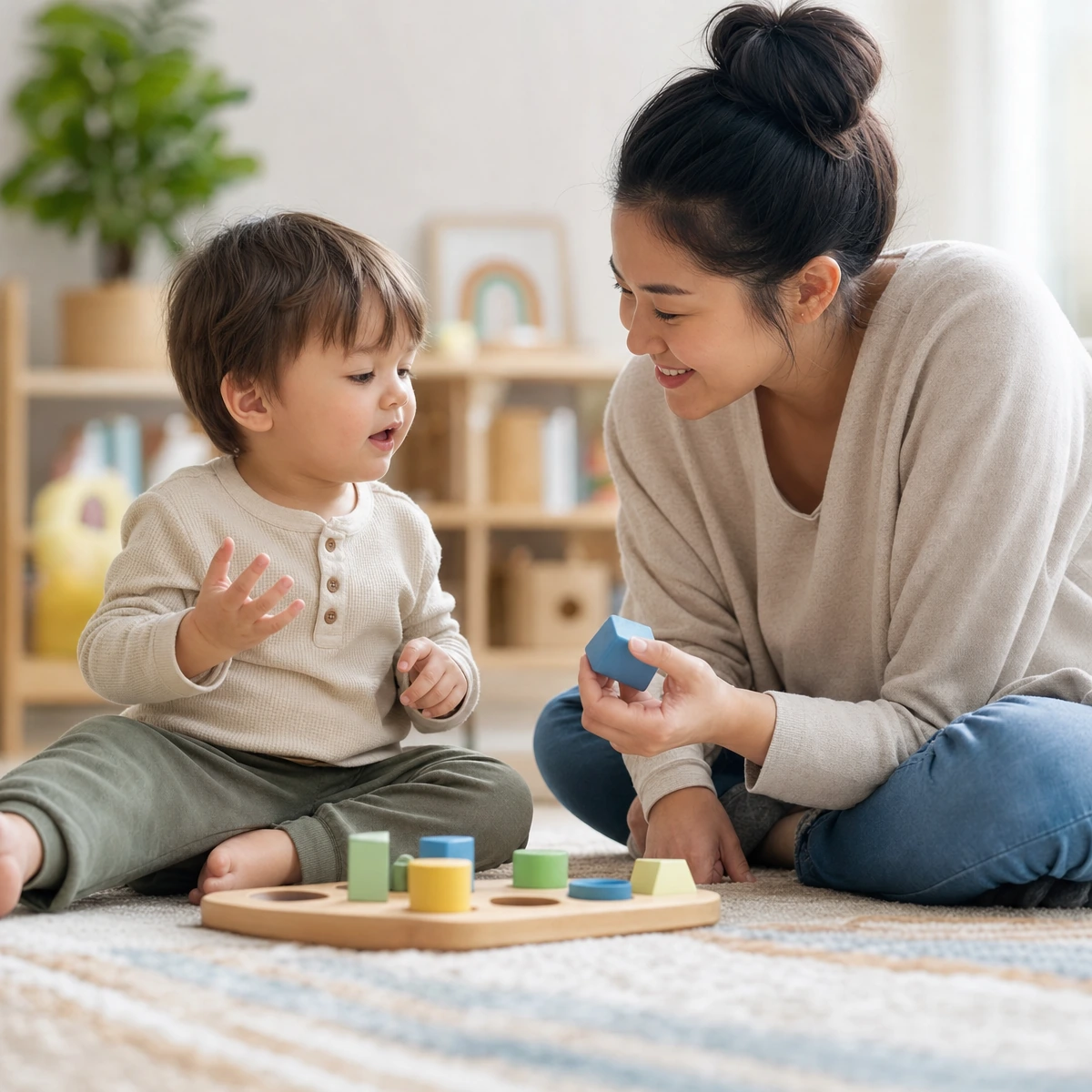
Making time to play with your child can meaningfully support speech and language development. If you need a place to begin, try these practical and enjoyable playtime ideas. You can also explore our recommended toys for 3-year-olds.
2. Read together every day
Regularly reading with your child can offer major benefits for communication. Children who are read one book each day are exposed to 78,000 additional words per year.
Reading together helps children learn new words, understand sentence structure, and strengthen phonological awareness. This is the ability to recognize the sounds that make up words and understand their meanings. As children grow, these speech and language abilities are linked to their academic skills.
Reading together can also strengthen your bond with your child, so make storytime part of the daily routine.
3. Sing songs together
Singing introduces new vocabulary while supporting listening and memory. You can also use the “pausing technique” to encourage your child to sing along. Here is a quick demonstration.
When you pause, your child has an opportunity to fill in the words you would have sung. This naturally encourages language development.
“Try singing songs that use gestures,” Ganjam suggests. “Children usually learn to imitate gestures before learning to imitate words.” Songs with hand motions, such as “The Itsy Bitsy Spider” and “The Wheels on the Bus,” can therefore support your child’s communication development in a natural way.
4. Build imitation skills
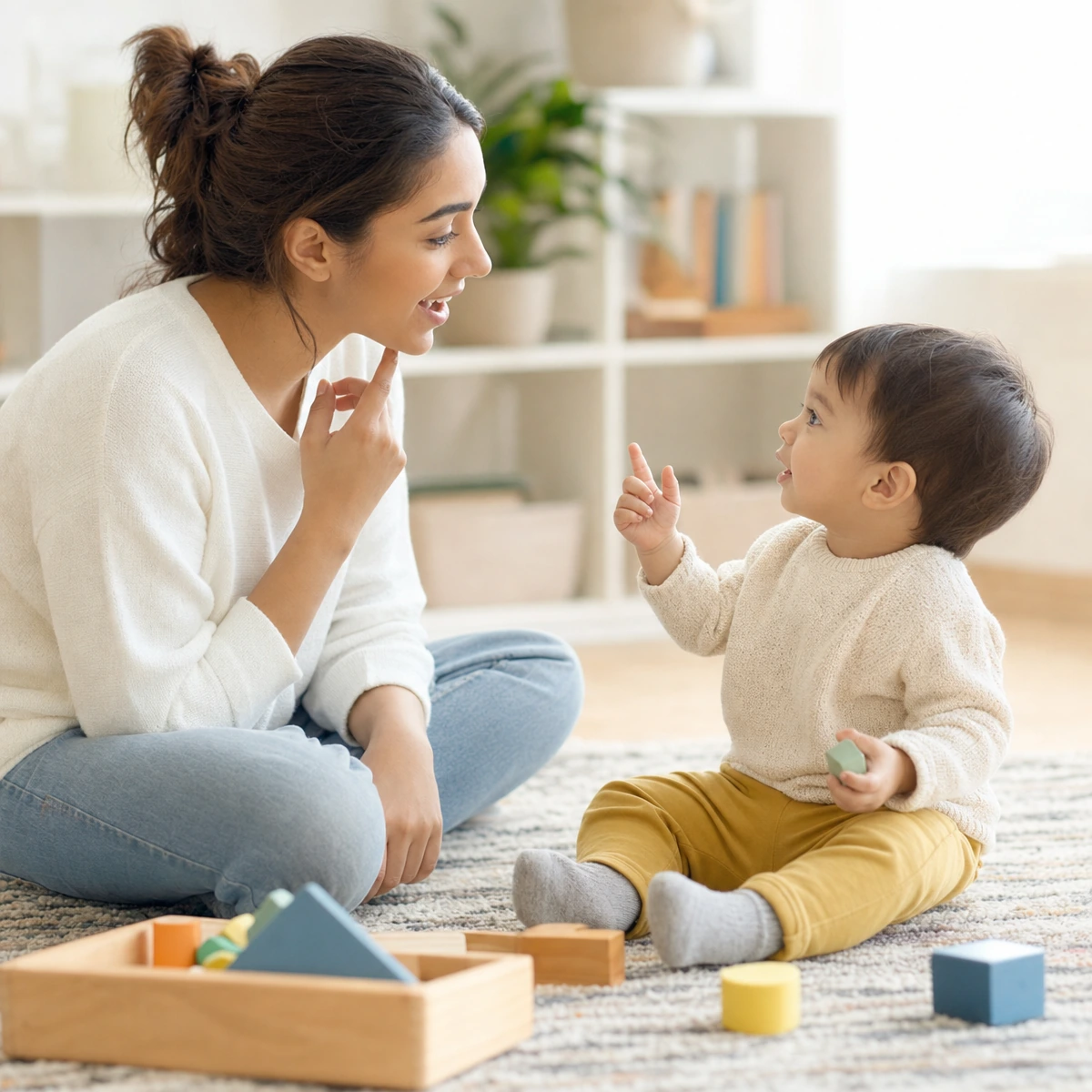
The ability to imitate sounds is important for speech and language development. If your child is not copying sounds yet, practice animal soundsor the noises made by trains and cars. These sounds are often fun and motivating for toddlers to imitate.
After your child begins imitating these sounds, move on to speech sounds such as vowels and consonants. Try simple babbles such as “ma-ma.” As these skills improve, you can begin practicing simple words.
If your child still struggles with verbal imitation after trying these steps, practice gesture imitation. Children generally learn to copy gestures and movements before they imitate speech. Start with simple gestures such as waving, blowing kisses, and clapping.
5. Model language for your child
One of the simplest and most effective ways to support your child is to model language. In other words, talk to them often, even when they do not respond. Children learn a great deal from the people they spend the most time with.
An easy way to model language is to describe your child’s actions during the day. You might say, “You’re eating breakfast” or “You’re playing with the ball.” By watching and listening to you, your child can learn words, what they mean, and how they are pronounced.
6. Build on your child’s words
This strategy is known as language expansion. It helps grow your child’s vocabulary and teaches sentence structure.
Here is how it works. If your child says “milk!” to request a drink, you can model a longer phrase such as “More milk!” or “Milk please!” If your child already uses phrases, you might say, “I want my milk, please!” and see whether they imitate you.
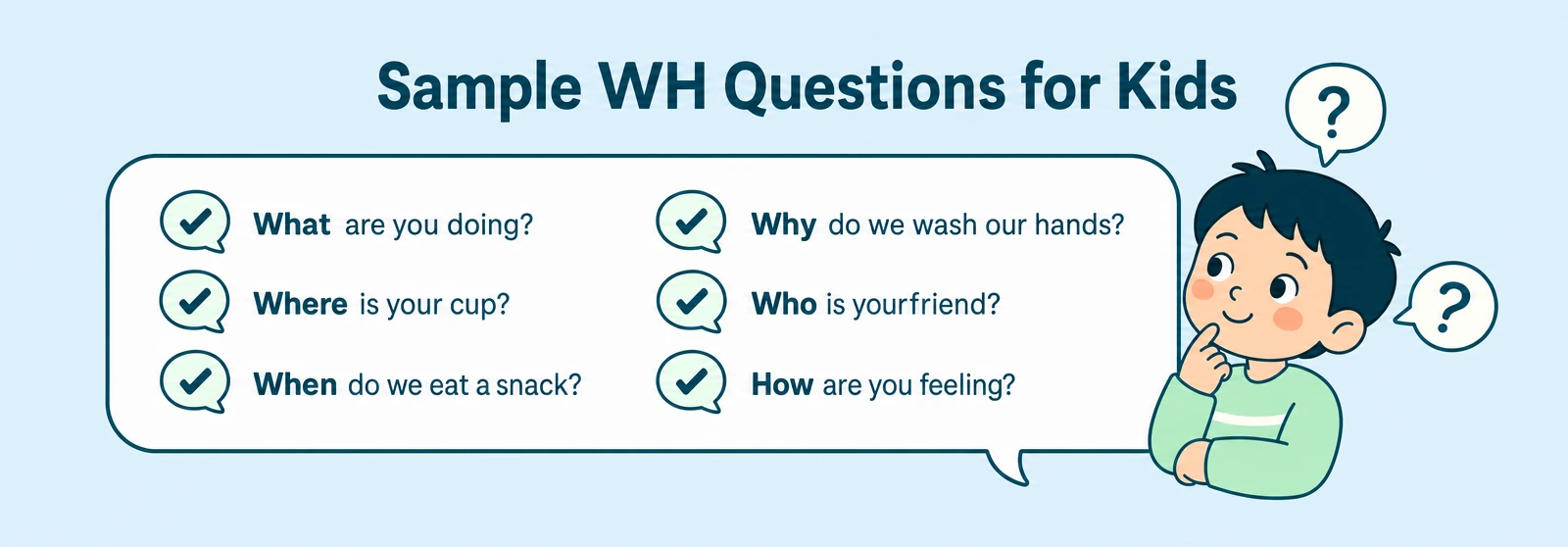
7. Ask open-ended questions
Invite conversation by asking open-ended questions rather than questions with yes-or-no answers. While reading, you could ask, “What do you see in the picture?” After visiting the park, you might ask, “What was the most fun at the playground?” When your child responds, help them express the idea more fully if needed. If they say “slide,” for example, you can model, “I liked going down the slide!”
Take the next step
You have one of the most powerful roles in your child’s development. If your 2- or 3-year-old is not talking, seeking help early can make all the difference. At Astrel, we have helped thousands of families across the country, and we would be honored to support yours. Here is one review from a family we have served:
“Ms. Katheryn was professional, very informative, friendly, honest, and really took the time out to help me, the parent, understand my daughter’s speech delay. She even gave me simple and daily tips to use with her that will help increase her communication and comprehension skills. Thank you for being a great support person!”
Whether your toddler is only babbling or understands everything but says very little, we can help you understand what is happening and decide what to do next. It is never too early or too late to seek support.
- Take our free screener for quick insights into your child’s communication skills
- Find a speech therapist who meets your family’s needs
- Learn more about speech delays in 2-year-olds and the signs to watch for
Frequently asked questions
What should I do if my 2- or 3-year-old is not talking yet?
If your child is age 2 or older and not talking, contact a speech therapist for an evaluation. Early intervention can make a big difference.
Why might a 2- or 3-year-old be nonverbal?
Speech and language delays have many possible causes, including hearing problems, autism, difficulty moving the mouth, a learning disability, neurological problems, or factors in the child’s environment.
Is it normal for a 2-year-old not to talk?
Toddlers typically say their first word at around 12 months, although children develop at different rates. If your child is 15 months old and still not saying words, consider contacting a speech therapist for an evaluation.
What are signs of autism in a 2- or 3-year-old?
A speech delay does not necessarily mean a child is autistic. However, it can be one sign of autism. Other signs include limited gestures such as waving or pointing, limited eye contact, and difficulty responding to their name. Learn more about signs of autism in 2-year-olds and 3-year-olds.