
Children do not all develop language in the same way. Some begin with single words, then combine them into sentences. Others first imitate scripts, or chunks of language, they have heard and later break those chunks into individual parts. This process is called gestalt language processing, and it is one way children develop language skills. If this sounds like your child, this guide explains GLP and when it may be helpful to consult a speech therapist.
Caregivers know that children communicate in many ways. As their language develops, we often understand every tone, word, and sentence, or at least try to, even when other people do not. That close understanding is one of the special parts of caregiving. So you may be surprised to learn that a communication difference you have noticed has a name: gestalt language processing (GLP).
The term describes how many children initially learn language by copying “language scripts” from TV, movies, or other people. Later, they begin to break those scripts apart and use individual words.
Perhaps a clinician or teacher has said that your child uses GLP, or you have encountered the term on social media. Either way, you may want to understand what it means, how it differs from other forms of language development, and how to support your child at home. This guide offers practical, reassuring answers.
How to use this guide
Every child learns differently, including when developing language. Use this guide to:
- Review the common GLP stages and consider where your child may be in their language development.
- Choose two or three support strategies to try at home with your child and, when applicable, their speech therapist. You are all part of the same team.
- Keep track of the phrases and scripts your child uses so you can share them with their speech therapist.
- Adapt your at-home strategies to your child’s current needs while creating room for continued growth.
Free 30-minute evaluation
Looking for a speech therapist?
Talk through what you are noticing and get clear next steps.
Book free evaluation
What is gestalt language processing?
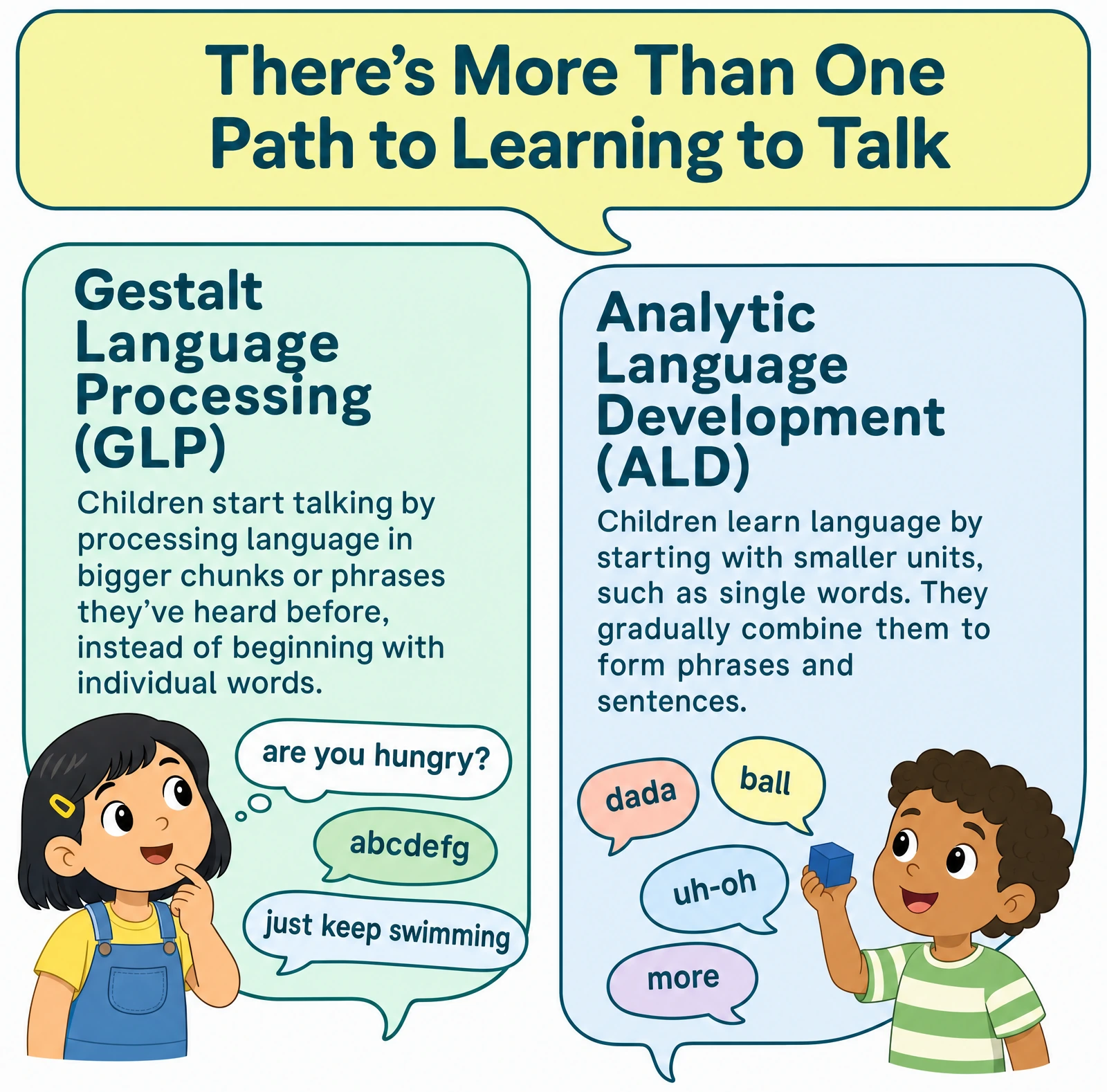
Children can develop language in different ways, including through gestalt language processing and analytic language development, explains Hamshi Ganjam, a licensed speech-language pathologist at Astrel. Understanding both approaches can offer useful insight into how your child learns. Here is how Ganjam explains each one to caregivers:
Gestalt language processing (GLP)
Children begin communicating with larger chunks or phrases they have heard before rather than individual words. Over time, they break these chunks into smaller, more individualized words and meanings. They then learn to combine those words into longer, more complex sentences.
Example: A gestalt language learner might say “Let’s Blaze!” from Blaze and the Monster Machineswhen they want to go somewhere. Their language sounds like a script.
Analytic language development (ALD)
Children begin with smaller units of language, such as single words, and gradually combine them into phrases and sentences.
Example: An analytic language learner may say “go” when they want to leave the house. After learning individual words, they develop the language skills to produce phrases such as “Let’s go out.”
Ganjam emphasizes that children’s brains process language in different ways, and that is normal. “There isn’t just one way that children learn to talk,” she says.
The stages of gestalt language processing
Clinicians with the American Speech-Language-Hearing Association (ASHA) recognize GLP as a “distinct and natural style of developing language.” The six recognized stages are listed below. Because every child is a unique learner, not all children follow this exact pattern. There is also no “fixed” timeline for moving through the stages.
- Stage 1: Whole language gestalts, including scripts, songs, and complete phrases.
- Stage 2: Mitigation, when gestalts are divided into shorter phrases or pieces of different scripts are mixed and matched.
- Stage 3: Single words are pulled from gestalts. A child may also use a two-word combination to describe one word, such as “bus + school” to mean “bus.”
- Stage 4: The child creates original phrases and early sentences, such as “The bus is coming.”
- Stage 5: The child produces original sentences with more complex grammar.
- Stage 6: The child creates original sentences using complete grammar.
How gestalt language processing relates to autism
Using GLP does not mean that a child is autistic. “Gestalt language processing is seen in both neurotypical and neurodivergent people,” Ganjam says. Neurodivergence can include autism spectrum disorder, attention deficit hyperactivity disorder (ADHD), Down syndrome, and many other conditions.
GLP has long been connected with autistic learning. One reason for this association is that autistic children often use echolalia, which means repeating a word or phrase they have heard before. “These can sound like movie lines, phrases from songs, or things they’ve heard others say,” Ganjam explains. Echolalia is one feature of GLP. The terms are related, but they do not mean the same thing.
When caregivers hear these repeated phrases, they may worry that they need to correct the child. However, “echolalia is actually a meaningful and important part of language growth for many children,” Ganjam says. “It’s how some children first begin to use language to connect, express feelings, or share experiences.”
Signs that your child may be a gestalt language processor
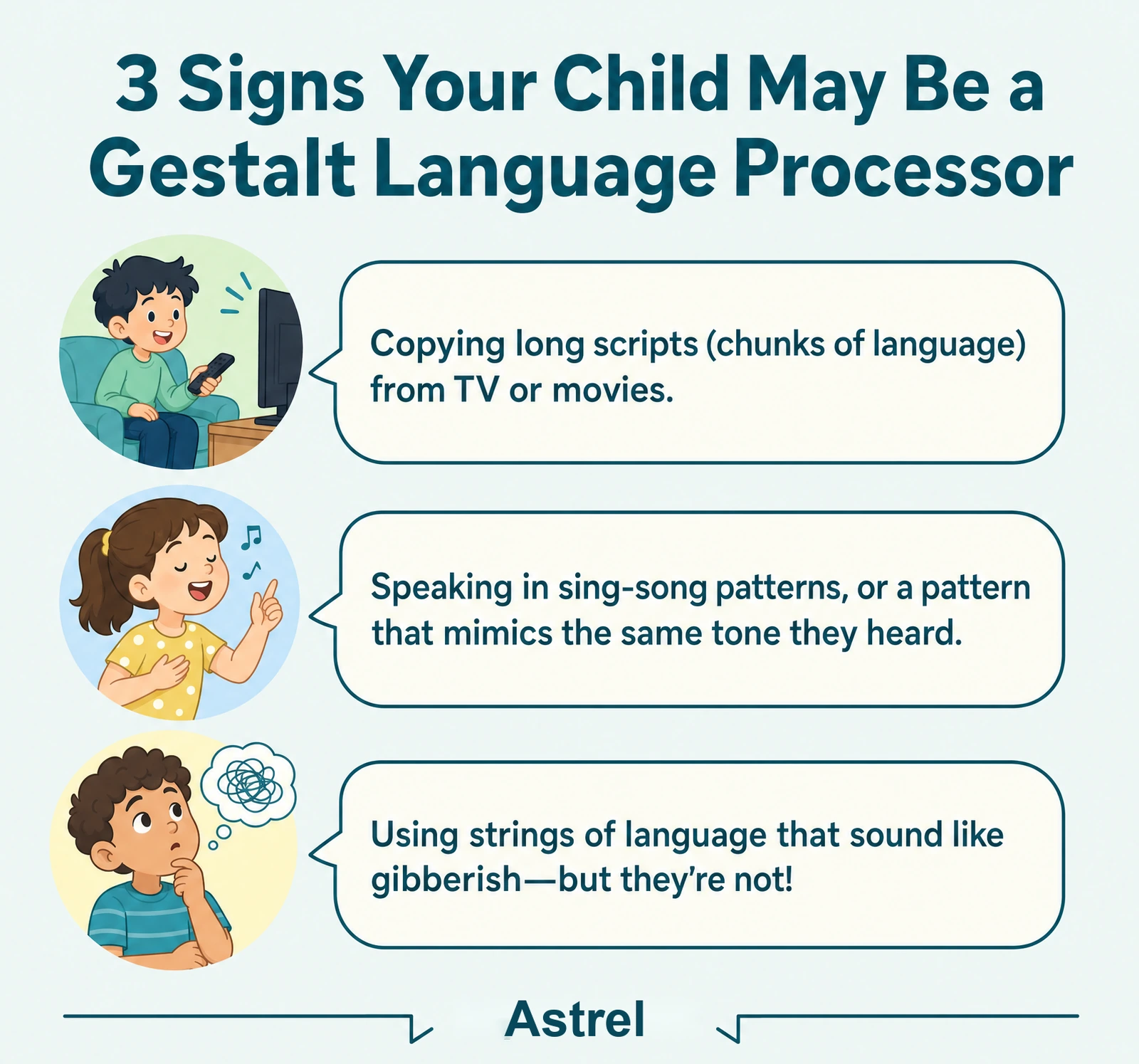
Recognizing that your child may use GLP can help you support their learning and development. According to Ganjam, signs may include:
Copying long scripts, or chunks of language, from TV or movies.
- Example: When feeling scared, a child might say “just keep swimming” from Finding Nemo.
Speaking with a sing-song pattern or copying the tone in which they originally heard a phrase.
- Example: Your child’s grandfather may say “goodbye my friend” when leaving. Your child might repeat the same phrase when they want to say goodbye.
Using strings of language that others cannot understand, sometimes called “jargon” or “gibberish.” They are not!
- Example: A child might say “Iliketoeateateatapplesandbananas” to communicate that they are hungry. You may recognize the meaning as their caregiver, even if someone else hears only gibberish.
What parents can do now: Strategies for home
You can support your child at home in many ways. The aim is to respect how they communicate and work with their strengths, preferences, and motivations. Focus on building communication, not eliminating scripts or echolalia. Meet your child where they are and pay attention to the intent and meaning behind their scripts rather than trying to achieve “correct” speech.
“It’s important for caregivers to understand that gestalt language processing is a normal, natural process. It’s meant to be supported, not fixed,” Ganjam says.
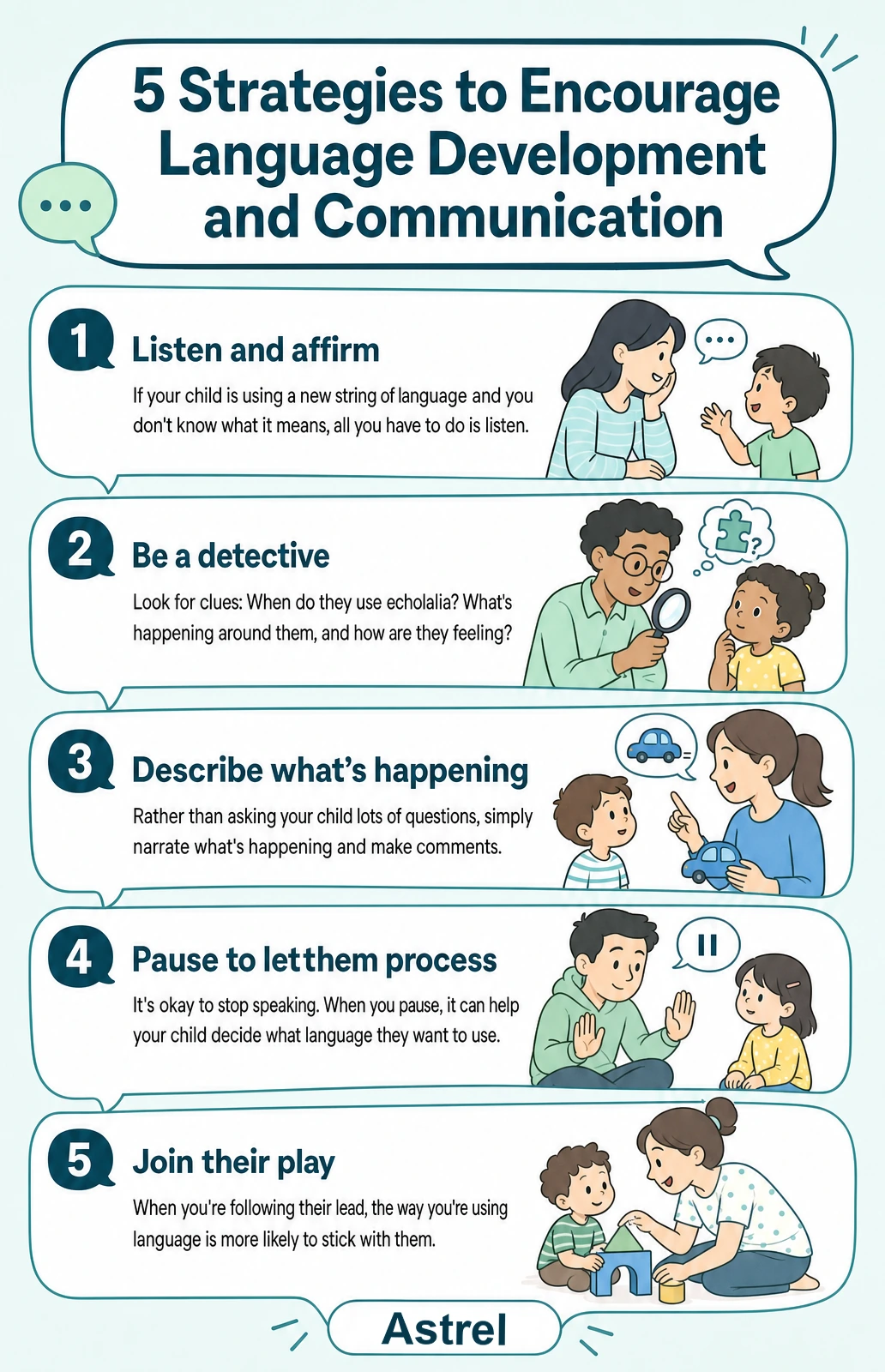
Remember, too, that too many questions can overwhelm someone who uses GLP. To encourage communication and language development without adding that pressure, try these 6 strategies recommended by Ganjam:
1. Listen and affirm
When your child uses a new string of language and you are unsure what it means, start by listening and validating their communication. “Smile, nod, or repeat what they said in a warm, affirming way,” Ganjam says.
2. Be a detective
“Rather than trying to stop echolalia, we want to understand what those phrases mean to the child and build on them,” Ganjam says. Look for context clues. Notice when your child uses the phrase, what is happening around them, and what they may be feeling at that moment.
3. Describe what is happening
Instead of asking your child questions about what they are saying, narrate the activity and make comments. For example: “We’re making lunch together! Now I’m cutting up your sandwich.”
4. Pause and give them time to process
It is fine to stop talking or narrating. A pause can give your child time to decide what language they want to use.
5. Join their play
“Gestalt language processors learn best through natural, child-led interactions, especially when they’re doing something they love,” Ganjam says. When you follow your child’s lead, the language you use is more likely to stay with them.
6. Build a “script bank” of useful phrases
Caregivers can model language for a child to use. Choose simple phrases such as “let’s go,” “time to go,” or “I like that.”
AAC and gestalt language processing
Children and adults can communicate in many ways beyond speech. AAC stands for augmentative and alternative communication. According to ASHA, AAC includes a couple of types:
- No-tech and low-tech, including gestures, facial expressions, writing, drawing, and pointing
- High-tech, including an app on a tablet or a computer that produces a voice
These tools make communication possible for the person using them. In fact, research has shown that AAC can enhance verbal communication rather than delay it.
If AAC may be appropriate for your child, a speech therapist can evaluate their abilities and recommend the AAC tools likely to be most useful for them. The therapist can show you how to use the tools, incorporate them into daily routines, and personalize them for your child. For example, you might add your child’s scripts to an AAC device or adjust the device’s voice so it sounds more “sing-songy.”
How to talk with teachers and advocate for support
Your child’s teachers can be important partners in language development. “Collaborate with teachers, caregivers, or anyone who knows your child well,” Ganjam says. If someone is having trouble understanding your child, ask which scripts your child uses and in what context. That information can help everyone interpret what your child is communicating.
Make sure teachers understand that repeated questioning can overwhelm a child who uses GLP. “They might not yet have the flexible language to respond,” Ganjam explains.
You can also suggest creating a script bank of model phrases that teachers and caregivers can use across settings. Teachers can model the phrases at school, while you use them during everyday routines at home.
Regular check-ins can also be valuable. By sharing progress at home and at school, you can adjust the model scripts you use, build on your child’s language, and support continued progress.
Helpful supplies for families
The following supplies and tools can help you support language development with your child at home:
- Visual supports, including core boards, communication boards, flip books, and picture cards. These are printed versions of tools you might see on a tablet. They contain squares with words and pictures, such as a smiley face for “happy,” or phrases paired with images, such as a child playing for “let’s play.” Children can point to them to communicate. You can make visual supports at home or find many options on Etsy.
- A notebook or app for recording scripts, the context in which they occur, and new mitigations, meaning scripts that have been broken down or segmented
- Tablet apps that support high-tech AAC
When to consider a speech-language evaluation
Gestalt speech is a normal, natural way for many children to begin talking. Even so, an evaluation by a speech therapist can be one way to support communication development. Ganjam says caregivers may want to consider an evaluation if a child is:
- Copying chunks of language from TV, movies, YouTube videos, or songs
- Speaking with sing-song patterns
- Noticing tone, rhythm, and emotion before focusing on the words themselves
- Using strings of speech that others cannot understand
You and your child will both attend the evaluation. Along with assessing your child, the speech therapist will speak with you about what you notice in your child’s communication. An audio or video recording can be useful because it allows the therapist to examine speech patterns and identify GLP features, such as sing-song phrases. “Collaboration with caregivers is essential in developing a thorough understanding of the child’s language patterns and supporting meaningful communication growth,” Ganjam says.
Related guides


What gestalt speech therapy sessions may look like
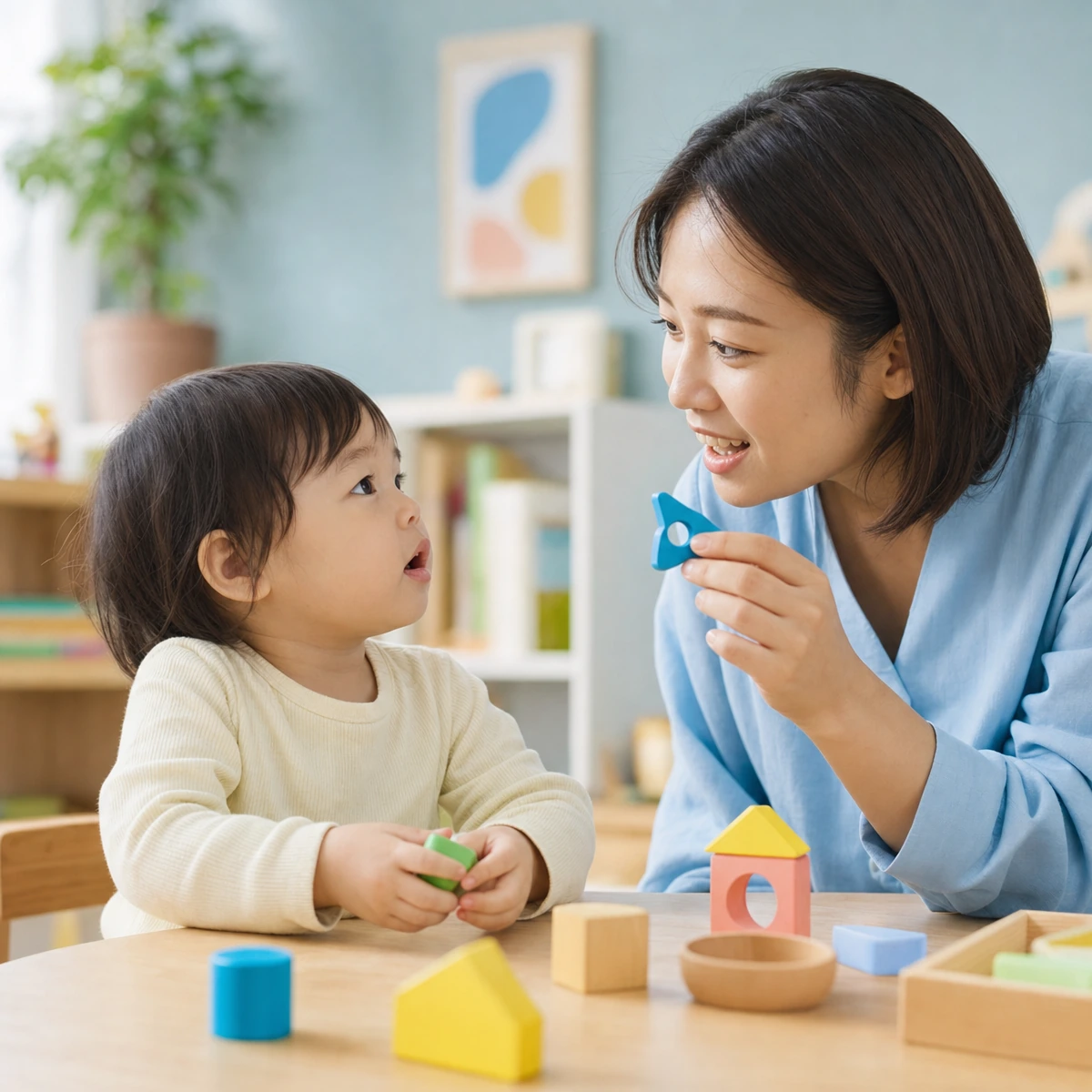
Speech therapy for GLP follows the same general approach caregivers use at home. “Sessions should be individualized and child-led,” Ganjam says. Play-based speech therapy helps build a connection between your child and the speech therapist. It places your child at the center and adapts to their interests and learning style.
“When we create this type of space, we can understand the child’s needs and model language based on what is meaningful to them,” Ganjam says. Without that approach, your child may be uninterested or disengaged, which is counterproductive.
During intake and the first sessions, caregivers and the speech therapist can work together to discuss:
- Your child’s interests
- Your child’s environment, including where their language comes from
- The situations and emotions connected with gestalts, which can offer insight into what your child is communicating
Partnering with a speech therapist
A team approach to language development can help your child continue making progress between sessions. Ask the speech therapist how you can work together. That partnership may include the following:
- Keep a record. Use a notebook to collect examples of your child’s scripts. Short video or audio recordings can provide additional clues, including when your child uses a script and how their voice sounds when they say it.
- Discuss goals. The goal is not to stop gestalts. Ask the speech therapist what progress may look and sound like for your child, how it will be measured, and how you can check in with each other to assess it.
- Learn how to practice. The speech therapist should teach you how to support your child’s communication skills at home. Discuss which language to model and simple ways to practice it during everyday routines.
Myths and facts about gestalt language processing
Many myths surround GLP. These are three of the ones we hear most often:
Myth: Echolalia has no meaning.
Fact: “Echolalia is a natural, beautiful stage of language development, and it’s something we can work with to support meaningful communication,” Ganjam says.
Myth: Children must learn single words first to communicate.
Fact: Teaching single words before a child is ready can set back their language development. Meet your child where they are and follow their lead. Meaningful phrases may offer the best starting point for communication.
Myth: Scripts should be stopped.
Fact: Scripts, or chunks of language, are one of the stages of GLP and a natural part of language development for a gestalt language processor. A caregiver’s role is to understand what those scripts mean to the child and build from them to support communication. Over time, the child can begin creating original sentences.
Frequently asked questions
What is an example of gestalt language?
Children may imitate scripts, or long chunks of language. For example, a child might say “to infinity and beyond” when they are ready to leave the house.
Is GLP effective for autistic children?
Autistic children may use gestalt language processing (GLP) to communicate. However, GLP is not a speech-language therapy taught by professionals. When a child uses GLP, speech therapists and caregivers work together to support the child and help them continue developing communication skills.
What are the 6 stages of gestalt language processing?
The six stages are: 1) whole language gestalts, such as songs or complete phrases; 2) mitigation, when gestalts are broken down; 3) single words or two-word phrases pulled from gestalts; 4) original phrases and early sentences; 5) more complex original sentences; and 6) original sentences using complete grammar.
How can you tell whether a child is a gestalt language learner?
Signs that a child may be a gestalt language processor include speaking in scripts, or larger chunks of language, using sing-song intonation, and repeating strings of words that others cannot understand.
How do you teach a child who uses gestalt language processing?
Play-based, child-led speech therapy can support your child’s language development. Parents can listen closely, learn what their child’s common phrases mean, and model language the child can use.
There is no single path to language development. Some children develop language through gestalt language processing. A child using GLP begins speaking with chunks of language, then breaks those chunks into individual words before building them into original sentences. For some children, this is a normal, natural part of developing language.
Caregiver support can help children develop language skills. Working with a licensed speech therapist, such as one at Astrel , can help your child build communication skills from home, where they learn best.
Glossary
Gestalt language processing (GLP): A form of language development in which a child begins with whole chunks of language, then gradually breaks them into smaller parts and individual words.
Analytic language development (ALD): A form of language development in which a child starts with smaller units, or single words, and systematically builds them into more complex language.
Echolalia: The repetition of expressive language a person has heard. It may happen immediately or be delayed by minutes or years.
Scripts: Large chunks of language, also called gestalts.