


You know your child better than anyone. With so much information available about autism spectrum disorder, you may be wondering how to recognize signs of autism in a 3-year-old.
Autism is a developmental condition that affects how children communicate, interact with others, and process the world around them. Signs can appear earlier, but they often become more noticeable between ages 2 and 3.
Speech therapy is among the most common therapies recommended for autistic children. Astrel speech therapists work with autistic people of all ages and their families. Below, we explain common signs of autism in a 3-year-old, what parents can look for, and how speech therapy may help.
What is autism spectrum disorder?
Autism spectrum disorder (ASD) is a neurodevelopmental condition that affects communication, social skills, and behavior. It is called a “spectrum” because its symptoms and their severity vary widely from child to child.
Some children have subtle or mild signs of autism, while others need more support in daily life. No two autistic children are exactly alike. Recognizing possible signs early is important so children can receive any support they need.
Free 30-minute evaluation
Looking for a speech therapist?
Talk through what you are noticing and get clear next steps.
Book free evaluation
Communication signs of autism in a 3-year-old
By age 3, most children use short phrases, ask simple questions, and follow basic directions. Not reaching these milestones could indicate a speech or language delay, or possibly autism.
A speech or language delay does not necessarily mean a child is autistic. The symptoms can overlap, although autism may involve some distinguishing behaviors that we cover below. First, here are several ways autism might affect a toddler’s communication.
Communication-related signs of autism to watch for in a 3-year-old include:
- Talking less than other children the same age: Your child may speak very little or not at all. You may feel that they constantly need to “catch up” with what you expect for their age. By age 3, children typically speak in short sentences and can express their needs easily.
- Repeating language, known as echolalia: A child may repeat words or phrases rather than use them meaningfully in conversation. Children who communicate this way may be gestalt language processors.
- Limited back-and-forth conversation: An autistic child may not respond when someone speaks to them, or they may find it difficult to take turns during an interaction.
- Not using gestures to communicate: Gestures such as waving, pointing, or nodding may be limited or absent.
- Difficulty following directions: Your child may not appear to understand or respond to spoken instructions such as “Go hang up your coat” or “Hand me the towel, please.”
Social signs of autism in a 3-year-old
By age 3, many children are becoming socially curious. They may begin interacting with friends, engaging in pretend play, and learning how to relate to others at school or daycare. An autistic child may have difficulty with some of these skills.
Common social signs of autism at age 3 include:
- Limited eye contact: Autistic children may avoid looking at people while talking or playing.
- Appearing uninterested in other children: A child may not approach or respond to other children during play.
- Limited pretend play: Play development may be delayed in autistic children. They may not act out simple play routines, such as feeding a doll or pretending to cook toy food.
- Difficulty understanding emotions: Your child may not seem to respond to other people’s feelings, or they may appear generally unaware of social cues.
Behavioral signs of autism in a 3-year-old
Many autistic children have distinctive or repetitive patterns of behavior. Behaviors that may indicate autism include:
- Repetitive movements: Examples include flapping their hands, rocking, or spinning.
- A strong need for routine: Your child may become very upset when their schedule or environment changes.
- Unusual responses to sensory input: A child may be sensitive to loud sounds, bright lights, or certain textures. They may also show no response to these sensations.
- Strong, highly focused interests: A child may fixate on one toy or topic and engage with it in the same way repeatedly.
- Unconventional ways of playing: Rather than using toys as intended, your child may line them up or focus on particular parts, such as wheels or tags.
What to do if you think your child may be autistic
It is natural to monitor your child’s development, and every child develops differently. Still, if your 3-year-old shows some of the signs described above, consider discussing them with a professional.
If you are concerned about your 3-year-old’s development, take these steps:
1. Talk with your pediatrician
Describe what you have noticed at home and ask about developmental screenings. Your pediatrician can help determine whether your child needs further testing for autism.
2. Request an autism evaluation
Ask your pediatrician how your 3-year-old can be evaluated for autism. The autism diagnostic process involves several steps. Several types of specialists can diagnose autism, including psychologists, pediatricians, and neurologists. Psychologists often play a major role in this process. According to the American Psychological Association (APA), a psychologist will likely consider the following information when making an autism diagnosis:
- Conversations with the child
- Observations of the child’s behavior
- Tests of the child’s cognitive and language abilities
- Medical testing to rule out other conditions
- Interviews with parents, teachers, or other adults who can answer questions about the child’s social, emotional, and behavioral development
3. Begin early intervention
If your child is diagnosed with autism, therapies such as speech therapy can help them build communication and social skills. The earlier a child receives support, the sooner they can begin making progress.
Related guides






How can speech therapy help autistic children?
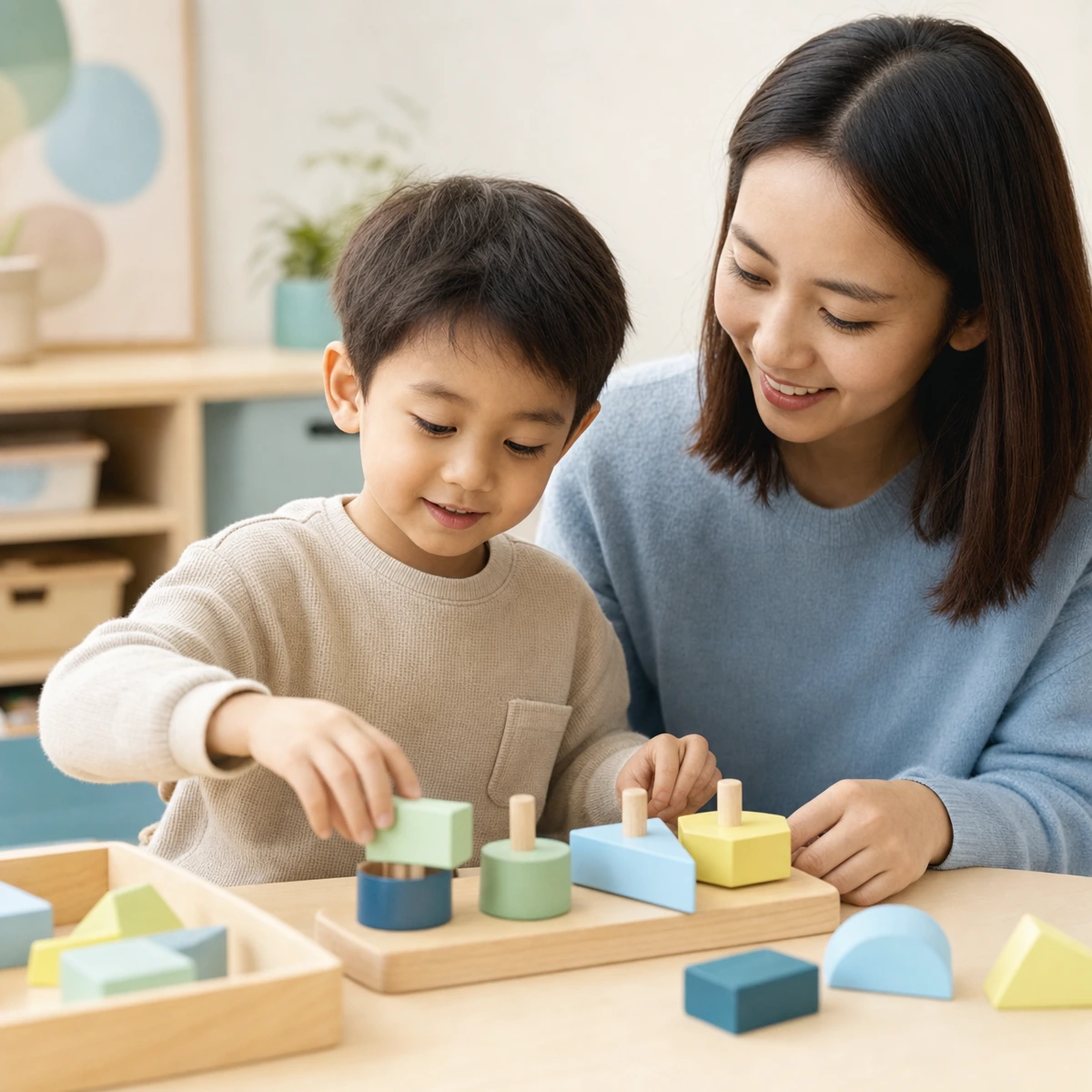
Speech therapy for autism helps children communicate as clearly as possible with the abilities they currently have. It also builds a foundation for more complex communication skills later.
Your child’s current way of communicating will shape their first speech therapy goals. Some children may work on using words or expanding words into phrases and sentences. Others may be nonverbal and learn other forms of communication, including gestures or augmentative and alternative communication (AAC).
It is important to choose a speech therapist who also supports you as a parent or caregiver. In online speech therapy at Astrel, your child learns directly from their speech therapist during sessions. You will also be coached on ways to support your child, because children learn best from the people they know, love, and spend the most time with. That means you.
You will also have access to our online learning portal, which includes videos, tips, and activities designed to make speech therapy practice at home easier. The more you practice within everyday routines, the faster your child will make progress.
To learn more about how Astrel speech therapy works for autistic children, read our autism treatment guide.
Find the right speech therapist for your child
If your child is having trouble communicating, we are here to help. We will match you with a licensed speech therapist who can complete an evaluation and help you decide on the best next steps. Find the right speech therapist for your child.
Frequently asked questions
What are the early signs of autism in a 3-year-old?
Early signs of autism in toddlers may include delayed speech, repeated phrases or behaviors, limited eye contact, and little interest in pretend play or playing with other children. If you notice these signs, consider talking with your pediatrician about an evaluation.
Does a speech delay mean my child has autism?
A speech delay can be a sign of autism, but it does not necessarily mean your child is autistic. Speech delays have many possible causes.
Can autism be diagnosed at age 3?
Yes, autism can be diagnosed at age 3. To make a diagnosis, doctors consider a child’s development, communication, and behavior. Specialists who can diagnose autism include psychologists, pediatricians, and neurologists. If you think your child may be autistic, ask your pediatrician about testing.
How can speech therapy help a 3-year-old with autism?
Speech therapy helps autistic children communicate more effectively, express their needs, and interact with other people. A speech therapist will develop a care plan around your child’s needs, with support and guidance for the family. For more information about how speech therapy can help autistic children, read this article.
An important note: When referring to a community as a whole, we believe the best approach is to prioritize that community’s voices, needs, and preferences. The current preference within the broader autism community is identity-first language, such as “autistic child” rather than “child with autism.” That is why we use identity-first language in our content. Astrel is committed to listening to and learning from the people we serve. If their preferences change, we will adjust our approach accordingly.