

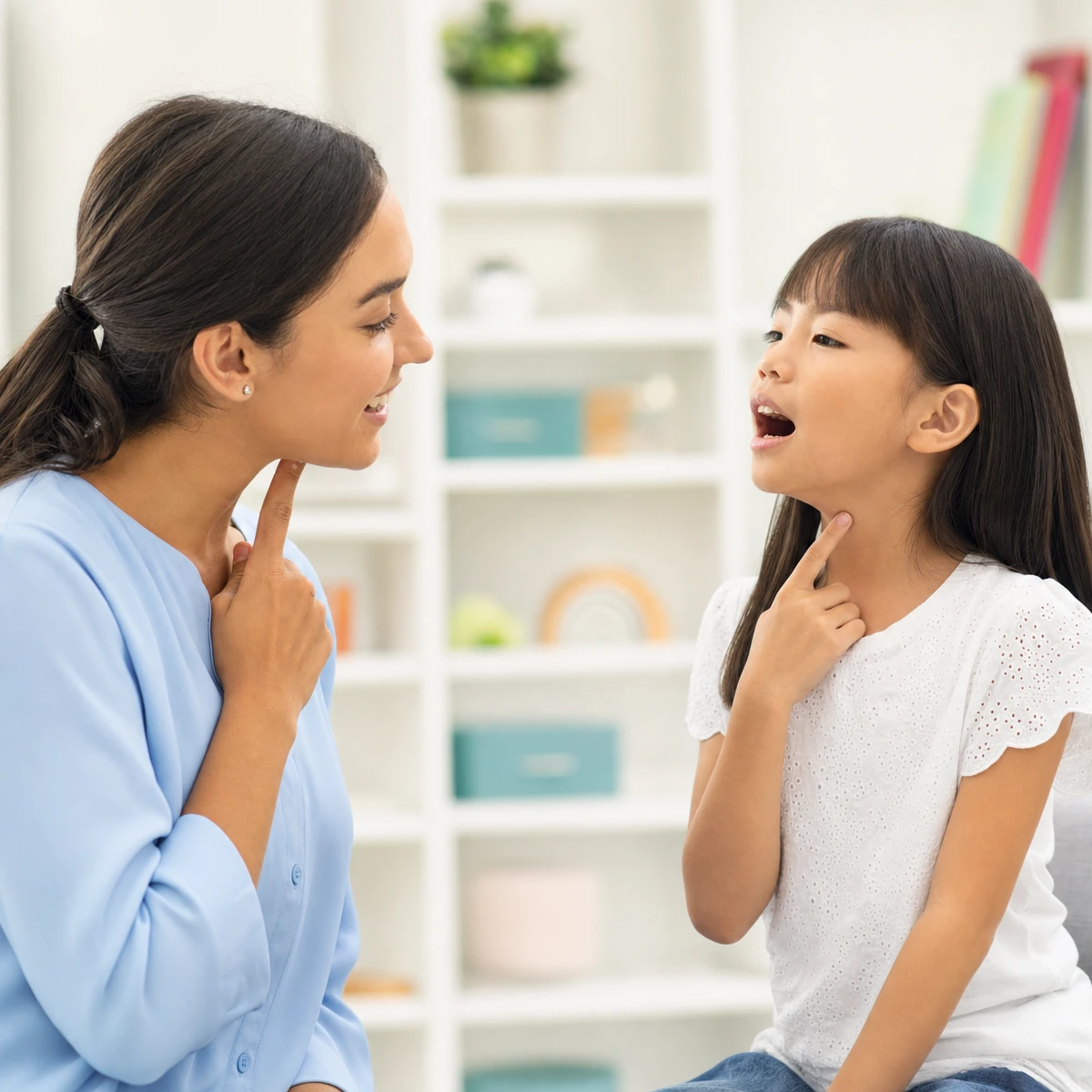
A child's voice may sound hoarse after cheering at a game or getting over a cold. But ongoing voice changes should not be overlooked. Persistent hoarseness, vocal fatigue, or a strained-sounding voice can make communication harder at school and in daily life. Many pediatric voice disorders improve with treatment such as speech therapy, which teaches healthy vocal habits and helps protect the vocal cords.
Key takeaways
- Voice disorders are common in children. Symptoms can include hoarseness, vocal fatigue, pitch changes, or trouble speaking clearly.
- Common causes include overusing the voice, illnesses such as colds or laryngitis, allergies, and conditions that affect the vocal cords.
- Early evaluation is important. If your child's voice has sounded hoarse or different for more than 2 to 3 weeks, consider talking with your healthcare provider.
- Speech therapy can help. Voice therapy gives the vocal cords time to heal while teaching children healthier ways to use their voices.
Free 30-minute evaluation
Looking for a speech therapist?
Talk through what you are noticing and get clear next steps.
Book free evaluation
What is a voice disorder?
Your child's voice is created when air moves through the vocal cords inside the larynx, also called the voice box. Voice quality can change if the vocal cords become swollen, irritated, or injured, or if they do not move normally.
Pediatric voice disorders are more common than many parents may realize. A voice disorder occurs when sound production is impaired, causing a voice that may sound hoarse, breathy, strained, weak, or unusually high or low in pitch. A voice disorder can make it difficult for a child to communicate clearly, which may affect their confidence and participation in activities.
What causes voice disorders in children?
Voice problems affect more children than many parents realize. A 2024 study of 1,154 caregivers of children ages 4 to 12 found that 6.7% of children were currently experiencing a voice problem, while 12% had experienced one at some point.
Several factors may raise a child's risk of developing a voice disorder, including:
- Talking or yelling frequently
- Straining the voice by speaking loudly or talking for long periods
- Frequent coughing or throat clearing
- Acid reflux
- Exposure to secondhand smoke
- Respiratory illnesses that affect the throat or vocal cords
- Nerve damage or other medical conditions that affect vocal cord movement
The study also reported a higher likelihood of voice disorders among boys, children with speech sound difficulties, and children who lived in larger households.
What do these findings mean?
For years, many people assumed that children would simply outgrow most voice problems. Some temporary hoarseness does resolve on its own, but a persistent voice disorder needs attention.
“A voice disorder can affect much more than how a child sounds,” explains Hamshi Ganjam. “It may make them harder for other people to understand, reduce their participation in class or activities, and affect their self-confidence.” Some children may even avoid talking because they feel embarrassed about their voice. This is why early evaluation and treatment matter.
Signs of voice disorders in children
Symptoms vary depending on the cause, but they often change how a child's voice sounds or feels. Spotting these signs early can help you find appropriate support before the problem becomes worse.
Common symptoms of pediatric voice disorders include:
- A hoarse, raspy, or breathy voice
- A voice that sounds strained, rough, or choppy
- A voice with an unusually high or low pitch
- Vocal fatigue or loss of the voice after talking
- Throat discomfort or pain during speaking or swallowing
- A sensation of having a lump in the throat
- Having to use extra effort to speak or be heard
Types of voice disorders in children
Children can experience several types of voice disorders, including:
Laryngitis: This is swelling of the vocal cords, often due to an infection or vocal overuse. Acute laryngitis typically resolves with rest and hydration, while chronic laryngitis may require ongoing treatment.
Vocal cord paralysis: The vocal cords are partially or completely unable to move, resulting in a weak or breathy voice. Possible causes include nerve damage from surgery, an infection, or trauma.
Spasmodic dysphonia: This neurological condition causes involuntary vocal cord spasms, which can make the voice sound tight or quivery.
Vocal nodules: These callous-like growths form on the vocal cords because of vocal abuse, such as frequent yelling. Nodules may cause a rough, hoarse voice, but the voice often improves with speech therapy.
Vocal polyps: These blister-like growths can cause breathiness and vocal fatigue. Like nodules, polyps often develop from vocal strain, but they may require medical intervention.
How to help your child care for their voice
Parents and caregivers have an important part in keeping children's voices healthy. Simple daily habits can help prevent vocal strain and support recovery when a child already has a voice disorder.
Try these practical ways to care for your child's voice:
Encourage good hydration. Water keeps the vocal cords lubricated, allowing them to vibrate more easily. Encourage your child to drink water throughout the day, particularly if they are active, have allergies, or use medications that cause dry mouth. When your child feels the need to clear their throat, suggest taking a sip of water instead. Limiting beverages that may irritate the vocal cords, including carbonated drinks and acidic options such as soda and citrus juice, can also help.
Reduce vocal strain. Teach your child that they can use a “conversation voice” rather than yelling or shouting whenever possible. After extended periods of talking, cheering, singing, or loud play, encourage them to rest their voice.
Practice healthy breathing. Slow, deep breaths provide consistent airflow to the vocal cords and reduce strain during speech. Voice therapists often teach breathing techniques that make voice production easier and more comfortable.
Make sleep and rest a priority. The vocal cords need recovery time, just like the rest of the body. Tired children may work harder to produce their voice, increasing vocal strain. A regular sleep schedule supports vocal health as well as overall health.
Manage underlying medical conditions. Conditions including allergies, asthma, and gastroesophageal reflux disease (GERD) may irritate the vocal cords and contribute to chronic hoarseness. Following your healthcare provider's guidance for managing these conditions can help protect your child's voice.
Know when to get help. Talk with your child's doctor if hoarseness lasts longer than 2 to 3 weeks or voice changes begin to affect communication, confidence, or participation in everyday activities. Early treatment can often keep more serious voice problems from developing.
Related guides







How speech therapy helps children with voice disorders
Voice therapy helps children learn healthier ways to use their voices. This can reduce strain, improve vocal quality, and protect the vocal cords against further injury.
The right treatment depends on what's causing your child's voice disorder. Speech therapy is often recommended together with medical care to help children build healthy vocal habits and improve both how their voice sounds and how it feels. Speech-language pathologists (SLPs) tailor treatment to each child's age, diagnosis, and everyday communication needs.
“Many children do not realize that the way they use their voice is placing extra strain on their vocal cords. Voice therapy builds their awareness of healthy vocal habits and gives families practical strategies to use each day in support of lasting improvement,” Ganjam adds.
Voice therapy for childhood hoarseness
Voice therapy is the most common treatment for chronic childhood hoarseness caused by vocal overuse or vocal cord lesions such as vocal nodules. In many cases, no other treatment is needed to improve the child's voice.
For conditions such as vocal cord cysts, polyps, or vocal cord paralysis, voice therapy may also be recommended after surgery to help restore healthy voice function.
At Astrel, children work with a speech-language pathologist who specializes in pediatric voice disorders. Therapy is available for children as young as 2 years old and always includes coaching for parents and caregivers, helping them support the child's progress between sessions.
Ganjam explains, “With younger children, therapy uses play and everyday routines to build awareness of healthy voice use. The therapist may introduce activities that let your child explore different volumes, pitches, and vocal qualities without straining their voice.” Families also learn to work these strategies naturally into activities such as reading together, playing, or getting ready for bed.
School-age children and teenagers often take part in more structured voice therapy exercises designed to decrease pressure on the vocal cords and promote smoother, more efficient voice production. The therapist will also identify easy ways for your child to practice during the day, making healthy vocal habits easier to develop over time.
A child's speech therapist may use:
- Resonant voice therapy, which teaches children to produce a clear, strong voice using as little effort as possible
- Diaphragmatic breathing to strengthen breath support
- Lip trills and gentle exercises to warm up the voice
- Relaxation and stretching exercises
- Massage of the neck and larynx, when appropriate
- Vocal function exercises that improve coordination between breathing and the vocal cords
Used together, these approaches can ease muscle tension, improve vocal fold closure, and make speaking more comfortable and less effortful.
How online voice therapy works
When a healthcare provider recommends speech therapy, working with an online speech therapist may offer several advantages over receiving care in a practice. Teletherapy might suit your family for these reasons:
Convenience and flexibility
Children can attend online speech therapy from home, eliminating the need to travel. Scheduling may also be easier, with appointments available after school, during the evening, or on weekends to accommodate your family's routine.
More affordable care
Because online therapy services do not have the overhead expenses of operating a physical practice, they can pass those savings along to families. This can make voice therapy more accessible and affordable.
Demonstrated effectiveness
A substantial body of research has found no significant difference in outcomes between online and in-person speech therapy. A licensed speech-language pathologist can provide high-quality care personalized to your child's needs.
Does your child have a hoarse voice? Astrel can help.
If your child's voice has been hoarse, raspy, or strained for more than a few weeks, it is time to seek support. An early evaluation can identify the cause, protect your child's vocal health, and help prevent continued vocal strain.
At Astrel, our speech-language pathologists specialize in assessing and treating pediatric voice disorders through convenient online therapy. We work closely with families to develop treatment plans that help children communicate confidently while protecting their long-term vocal health. Get matched with a licensed speech therapist today.
Frequently asked questions
What does it mean if my child's voice sounds hoarse?
A hoarse voice may sound raspy, rough, breathy, or deeper than your child's usual voice. Hoarseness is often temporary and can occur with a viral illness such as a cold or croup. Other causes include allergies, frequent coughing, and vocal overuse from yelling, cheering, or singing loudly. Hoarseness that persists may indicate a voice disorder that could benefit from evaluation and treatment.
Why is my baby hoarse if they are not sick?
Viral illnesses commonly cause hoarseness in babies, but other possible causes include frequent crying, acid reflux (GERD), allergies, irritation caused by dry air, or, rarely, a condition affecting the vocal cords or the nerves that control them.
Some babies are born with structural or movement differences in the voice box that cause hoarseness from birth. Talk with your pediatrician if your baby has persistent hoarseness, noisy breathing, feeding problems, or poor weight gain. The pediatrician may recommend an evaluation by an ear, nose, and throat (ENT) specialist to identify the cause.
How can I help prevent hoarseness in my child?
Not every voice problem is preventable, but healthy vocal habits can reduce your child's risk of chronic hoarseness. Encourage your child to:
- Drink plenty of water during the day.
- Avoid frequent screaming or yelling whenever possible.
- Rest their voice after talking or singing for long periods.
- Breathe slowly and steadily while speaking.
- Get enough sleep to give their voice time to recover.
- Follow treatment guidance for conditions such as allergies or GERD, which can irritate the vocal cords.
Do children outgrow voice disorders?
Sometimes. Temporary hoarseness caused by a cold, allergies, or occasional vocal overuse often resolves. Chronic voice disorders, however, do not always go away as a child grows. If your child's voice has been hoarse or different for longer than 2 to 3 weeks, an ENT or speech-language pathologist can evaluate them and determine whether treatment is necessary.
When should my child see a voice therapist?
A voice evaluation may be helpful if your child's hoarseness lasts more than 2 to 3 weeks, repeatedly returns, or starts to interfere with everyday communication. You should also consider seeking help if your child:
- Avoids speaking because they feel embarrassed about their voice.
- Has voice changes that make them difficult for others to understand.
- Often loses their voice after talking.
- Reports throat pain or vocal fatigue.
- Has received a diagnosis of vocal cord nodules or a different voice disorder.
How does voice therapy for children differ from adult therapy?
Children's voice therapy is adapted to their age, interests, and developmental stage. Younger children often learn healthy voice habits through engaging, play-based activities. Parents and caregivers take an active role so they can continue practicing the strategies at home.
Older children and teenagers may complete more structured voice exercises while receiving support tailored to their age and goals.
Voice therapy for adults often centers on restoring voice function after an illness, injury, or age-related change. Pediatric voice therapy instead emphasizes protecting the developing voice, preventing long-term vocal strain, and helping children communicate confidently in daily life.