


Your voice is central to everyday communication, connection, and self-expression. It is also essential in many jobs. That makes it important to know how to care for your voice, prevent voice problems, and find the right treatment if you need it.
Key takeaways
- An estimated 7.6% of U.S. adults have a voice problem. Voice issues can affect your work, relationships, and ability to take part in everyday life.
- Vocal hygiene means practicing healthy habits that help protect and care for your vocal cords.
- Ways to care for your voice include staying hydrated, addressing a dry mouth or throat, managing allergies or acid reflux, and avoiding toxins such as smoke.
- Other vocal hygiene habits include limiting how much you speak in noisy places, setting aside time for vocal rest, and learning to speak with less vocal effort.
- Contact your doctor if changes in your voice last longer than two weeks. Symptoms of a voice disorder can include throat pain or tightness, running out of air while speaking, a strained or hoarse voice, and periods of voice loss.
- A speech therapist can teach you exercises to help heal your voice, show you how to speak with less vocal effort, and recommend a vocal hygiene routine tailored to your needs.
Free 30-minute evaluation
Looking for a speech therapist?
Talk through what you are noticing and get clear next steps.
Book free evaluation
Why preventing voice problems matters
Have you ever lost your voice because of laryngitis or after talking for too long? Think about how it affected your daily life and ability to communicate. "People rarely think about their voice unless something goes wrong, but it's an essential part of how we express ourselves and interact with others," says Adhvika Shetty, a licensed speech-language pathologist with Astrel.
Understanding how your voice works can help. Your voice is located at the top of your neck, in front of the spinal cord. The vocal cords, also called vocal folds, sit within the larynx, or “voice box.” Your vocal folds stay open when you inhale so you can breathe. They close when you produce your voice and when they need to protect your airway during swallowing.
Preventing voice disorders and teaching people about vocal health are important. This education is also known as vocal habilitation. Many jobs require employees to speak for long periods with little or no time for vocal rest and recovery. Some people must speak over loud, noisy environments without proper equipment to amplify their voices. These occupational health hazards are among the reasons vocal health is a public health concern.
According to the National Institute on Deafness and Other Communication Disorders (NIDCD), an estimated 17.9 million U.S. adults ages 18 or older, or 7.6%, report having had a voice problem.
Fortunately, you can learn how to protect your vocal health. Practical steps can help prevent vocal injury and support a healthy voice throughout your life.
Tips for better vocal health and hygiene
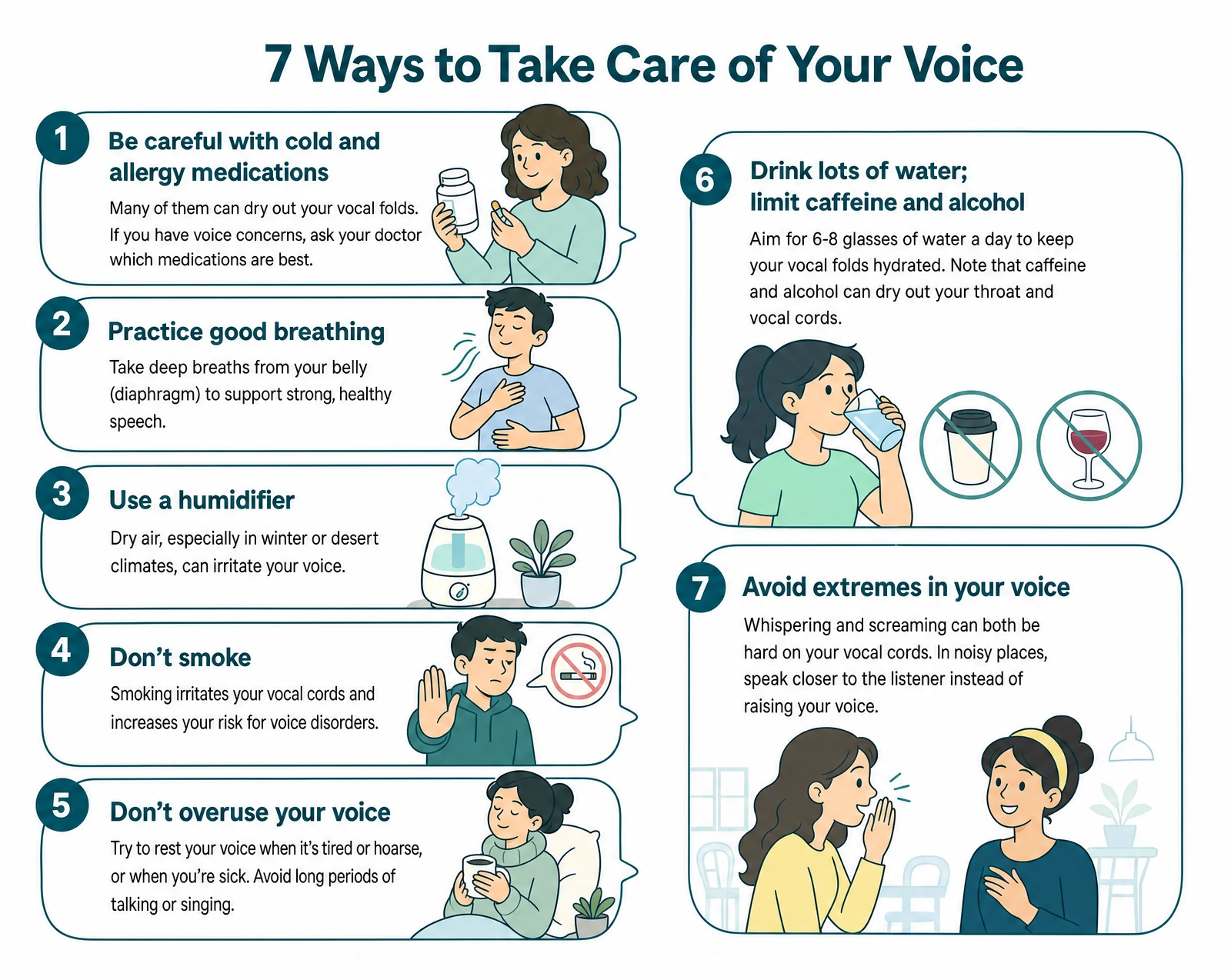
Vocal hygiene refers to healthy habits that help you care for your vocal cords. Use these strategies to protect your voice:
Stay hydrated. Proper hydration helps your vocal folds work as they should by lubricating and protecting the tissue. Drink plenty of healthy fluids, including water, throughout the day.
Address a dry mouth or throat. If your mouth or throat feels dry, try a humidifier or steamer. Drink more water, reduce your use of antihistamines and mint, and check whether any medications you take may have a drying effect. It can also help to practice breathing through your nose instead of your mouth.
VocalMist, slippery elm, and fennel may also help relieve dry mouth. Talk with your doctor if the dryness is severe or does not improve with these simple changes. Your doctor can help determine the cause.
Pay attention to your breathing. "The breath is to the voice as gas is to a car," Shetty says. "The breath turns the voice on!" Take replenishing breaths while you speak, and try not to keep talking on “empty air” at the very end of a breath. Better posture may also make breathing easier.
Try to inhale through your nose instead of your mouth as well. Your nasal passages clean and moisten the air before it reaches your vocal cords.
At least 10 minutes of complete vocal rest is recommended per one hour of speaking or voice use.
Avoid speaking in noisy environments. Try nonverbal communication instead, such as facial expressions or hand gestures. You can also use appropriate amplification, such as a microphone, to increase the volume of your voice.
Use care during video calls. Pay attention to your speaking volume on video calls. If you notice that you are raising your voice, adjust the microphone or speaker settings instead. A high-quality headset with a good microphone may reduce the need to speak loudly and help minimize vocal strain.
Make time for vocal rest. Build vocal rest into your daily routine. Vocal rest means not using your voice at all. At least 10 minutes of vocal rest per one hour of speaking or voice use is recommended.
Treat allergies or reflux disease. Frequent throat clearing or a chronic coughcould signal allergies or reflux disease. See your doctor to identify the underlying cause. If you have acid reflux, try these dietary and lifestyle changes and see whether your voice quality improves.
Practice speaking with less vocal effort. You might lower your volume or focus on speaking with ease instead of “pushing” your voice out.
Limit exposure to allergens, toxins, and smoke. "Remember, anything you inhale touches your vocal cords," Shetty notes.
Care for your whole mind and body. If you are experiencing chronic stress, you may be holding tension in your body. That tension can spread to the muscles in your neck and throat. Fatigue can also make your voice feel tired, which may cause you to “push” your voice out with more effort.
Create an exercise routine, even if it is as simple as taking a daily walk. Get plenty of rest. Eat hydrating fruits and vegetables, along with a diet rich in antioxidants and whole foods. Look for other ways to lower your stress, too.
Prepare for long periods of speaking or singing. If you expect to speak or sing for awhile, a vocal warm-up before the activity and a cool-down afterward may be useful. You can explore vocal exercises such as lip trills, tongue trills, or humming with pitch glides. Straw phonation is another useful exercise for preventing and combating vocal fatigue.
What are the symptoms of voice problems?
If you notice a change in how your voice sounds or feels, consider seeking care from an otolaryngologist, also called an ear, nose, and throat (ENT) doctor. This doctor can help determine what is causing the voice problem.
Common symptoms that may indicate a voice disorder include:
- Pain or tightness in your throat
- Running out of air while you speak
- A strained, hoarse, or tired-sounding voice
- Trouble projecting your voice
- A reduced vocal range
- Periods of vocal aphonia (times when you cannot speak at all)
"If you have any of these symptoms and they don’t get better after two weeks, it’s important to seek a diagnosis," Shetty says.
Related guides







How speech therapy can help with voice problems
A voice therapist can help you:
- Learn voice therapy exercises to practice throughout the day to soothe and heal your voice
- Develop a more vocally efficient way of speaking, allowing you to speak for longer periods with less vocal effort
- Build a vocal hygiene routine around your specific needs and concerns
Areas a voice therapist can address include, but are not limited to:
- Muscle tension dysphonia
- Vocal lesions, including nodules, polyps, and cysts
- Vocal fold paralysis
- Degenerative voice
- Gender-affirming voice training
Caring for your voice matters regardless of where you work or how often you speak. However, vocal hygiene is only one part of vocal healing. A voice therapist combines education about vocal health with direct voice intervention to help you meet your goals and communicate more easily. Find the right voice therapist for your needs at Astrel.
Frequently asked questions (FAQs)
How can I keep my voice healthy?
Several healthy habits can help you care for your voice. Common strategies include drinking plenty of water, treating a dry mouth or throat, limiting how much you speak in noisy environments, resting your voice when needed, and avoiding smoke and allergens.
How long should I rest my voice when I am sick?
Vocal rest can help when a cold, the flu, or another illness affects your voice. Speak as little as possible, and do not whisper. A useful rule of thumb is 10 minutes of vocal rest per every 1 hour of speaking. However, if symptoms such as hoarseness continue for longer than two weeks, contact your doctor.
Is whispering bad for your voice?
Yes. Whispering may put more strain on your vocal cords than speaking normally. To whisper, we have to squeeze the vocal cords more tightly, which can cause strain and irritation. If you need to rest your voice, try not to speak at all. When speaking is necessary, you can use “confidential voice.” This means using your full voice at a very low volume with very little vocal effort.
Which foods or drinks are bad for your voice?
Nothing you eat or drink touches the vocal cords, so no food or drink is inherently bad for your voice. However, alcoholic drinks can cause dehydration. If you drink alcohol, it is best to drink an equal ratio of water to alcoholic beverage. Spicy and acidic foods, including citrus fruits and tomato sauces, may also lead to acid reflux, which can irritate the vocal cords.
How much water should I drink for vocal health?
Aim for at least 6 to 8 glasses of water each day. Your needs may vary based on your activity level, climate, and how much you use your voice. A portable nebulizer can also increase hydration and improve moisture on the surface of your vocal folds.
What is vocal hygiene?
Vocal hygiene refers to healthy habits that help you care for your voice and prevent voice problems. The right habits vary from person to person. Examples include staying hydrated, setting aside time for vocal rest, avoiding speaking in noisy places, and treating allergies or reflux disease.