


Hoarseness, also known as dysphonia, is a change that makes your voice sound rough, strained, raspy, or otherwise different from usual. It can result from a cold or flu, allergies, acid reflux, voice overuse, aging, and other conditions. Hoarseness usually improves within a couple of weeks with vocal care and voice rest. If it lasts longer than 3 weeks, you should seek treatment.
Key takeaways
- Hoarseness, also called dysphonia, can make your voice sound rough, raspy, breathy, strained, softer, or otherwise different from usual.
- Being sick is not the only cause of a hoarse voice. Voice overuse, allergies, acid reflux, aging, stress, and other conditions can also affect how your voice sounds.
- With good vocal care and voice rest, most cases of hoarseness improve within a few days to a couple of weeks.
- See a healthcare provider if hoarseness lasts longer than 3 weeks or occurs with trouble breathing, trouble swallowing, coughing up blood, neck swelling, or complete voice loss.
- If hoarseness continues or keeps returning, a speech-language pathologist can provide personalized voice therapy to help improve your voice quality.
Free 30-minute evaluation
Looking for a speech therapist?
Talk through what you are noticing and get clear next steps.
Book free evaluation
What is hoarseness?
Hoarseness is a change in the sound of your voice that can range from mild to severe. Your voice may sound rough, raspy, or strained. It may also become weak, breathy, or lower in pitch than usual.
Is a raspy voice the same as hoarseness?
A raspy voice generally means the same thing as hoarseness, which is also called dysphonia. “Hoarseness means your voice sounds rough, raspy, breathy, strained, softer than usual, or changes in pitch because your vocal cords aren’t vibrating normally,” explains Hamshi Ganjam, a speech-language pathologist at Astrel.
What can a hoarse voice be a symptom of?
A voice becomes hoarse when something irritates, inflames, or changes how the vocal cords work. Some causes are temporary, while others require medical treatment.
Your vocal cords are located inside the larynx, or voice box. Air from your lungs passes through the cords, causing them to vibrate and produce sound. Anything that affects these structures can lead to hoarseness.
Why is my voice hoarse if I’m not sick?
You can develop a hoarse voice even when you are not sick. Common reasons include voice overuse, allergies, acid reflux, stress, aging, and other conditions that affect the vocal cords.
Your vocal cords can become irritated or swollen even if you do not have a cold or the flu. Common causes include:
- Laryngitis, which is often caused by a cold, allergies, or a sinus infection
- Respiratory infections
- Allergies and postnasal drip
- Long periods of speaking, singing, cheering, or yelling
- Speaking at a pitch much higher than your natural voice
- Regularly using vocal fry, or speaking in a very low tone of voice
- Acid reflux (GERD or laryngopharyngeal reflux)
- Smoking or being exposed to tobacco smoke
- Natural changes to the vocal cords caused by aging
- Vocal nodules, cysts, or polyps
- Vocal cord paralysis or paresis
- Muscle tension dysphonia
- Vocal cord hemorrhage
- Neurological conditions, including stroke and Parkinson’s disease
- Less commonly, cancers of the throat, voice box, or lungs
When should I be concerned about hoarseness?
Most hoarseness clears up on its own within a couple of weeks. See a healthcare provider if your voice remains hoarse for more than three weeks or you develop another warning sign, such as trouble breathing, coughing up blood, or pain when speaking or swallowing.
For ongoing hoarseness, an otolaryngologist, also called an ear, nose, and throat doctor or ENT, can examine your vocal cords. The doctor will likely recommend working with a speech-language pathologist, or speech therapist, who specializes in voice disorders.
A speech therapist can evaluate your pitch, loudness, vocal quality, and vocal range, then develop an individualized treatment plan.
How is a hoarse voice treated?
The right treatment depends on the cause of your hoarseness. For many people, voice therapy and healthy vocal habits can improve voice quality and help prevent future problems.
“Voice therapy helps you learn to use your voice safely, efficiently, and comfortably,” Ganjam explains. “This is especially helpful for people who rely on their voice for work, such as teachers, coaches, hairdressers, attorneys, and sales professionals.”
Voice therapy may involve:
- Learning healthy breathing techniques for speaking
- Reducing harmful vocal habits, including yelling and shouting
- Improving hydration and other habits that support vocal health
- Practicing voice therapy exercises that help strengthen and balance the vocal cords
- Using stretches and massage to ease muscle tension
Voice therapy can help you:
- Reduce swelling and inflammation
- Improve your voice quality
- Decrease muscle tension
- Improve breath support
- Build speaking endurance
- Gain more control over pitch and volume
Related guides







How long does treatment for hoarseness take?
Voice therapy often continues for 4 to 8 weeks, with one or two sessions per week. However, the exact timeline varies based on the cause and severity of your hoarseness, as well as how consistently you practice the techniques between sessions.
Ganjam emphasizes that “Voice therapy is a process that takes time. Be patient and give yourself grace along the way. It may take weeks or months of practice to see a difference, but stick with it, and you’ll see great improvements in the quality of your voice!”
How to help prevent a hoarse voice
The importance of good vocal hygiene cannot be overstated. Healthy vocal habits can reduce your risk of hoarseness and help protect your voice over time.
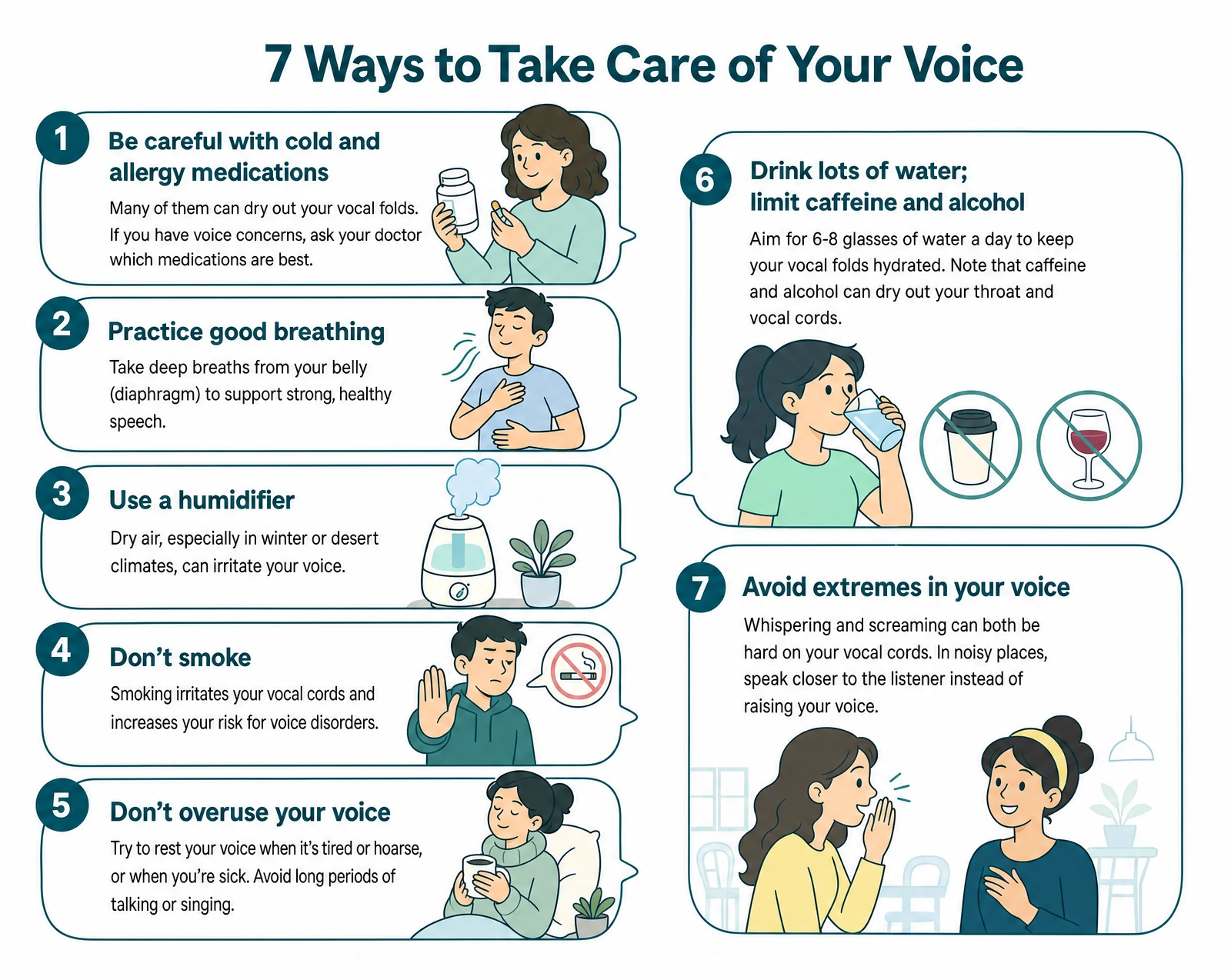
Simple ways to care for your voice include:
- Drink plenty of water throughout the day.
- Take full, easy breaths while speaking rather than talking until you run out of air.
- When possible, breathe through your nose to help warm and humidify the air.
- Work with your healthcare provider to manage acid reflux or allergies.
- Take regular voice breaks, especially if your work requires a lot of talking.
- Avoid smoking and exposure to secondhand smoke.
- Speak at a comfortable volume rather than forcing your voice to sound louder than necessary.
- Try not to clear your throat frequently. Swallow or sip water instead.
Teletherapy for voice disorders
If your healthcare provider recommends voice therapy, working with an online speech therapist may make care easier and more convenient to access. Astrel’s speech therapists provide evidence-based voice therapy through secure video sessions you can attend from home.
Flexible appointment times, including evenings and weekends, can make online therapy easier to fit into your schedule.
Caring for your voice now can help protect it in the years ahead. If you have ongoing hoarseness, a speech-language pathologist can help identify what is causing it and create an appropriate treatment plan for you. Click here to get started.
Frequently asked questions about hoarseness
What does hoarseness mean?
Hoarseness, also known as dysphonia, means your voice sounds rough, raspy, breathy, strained, softer than usual, or different in pitch. It occurs when the vocal cords do not vibrate normally and is usually not a sign of a serious illness.
Why does my voice become raspy at night?
Your voice may sound raspier in the evening because your vocal cords have been working throughout the day. Some of the most common reasons include vocal fatigue, dehydration, acid reflux, and postnasal drip.
How long should I wait before seeing a doctor about a hoarse voice?
Most hoarseness improves within a few days to two weeks. Contact a healthcare provider if it lasts longer than three weeks or occurs with trouble breathing, trouble swallowing, neck swelling, coughing up blood, or complete voice loss.
Can stress make your voice hoarse?
Yes. Stress and anxiety can tighten the muscles around the voice box, alter your breathing, worsen acid reflux, and contribute to muscle tension dysphonia. Any of these changes can make your voice sound hoarse or strained.
Can vocal rest cure hoarseness?
Vocal rest often improves hoarseness caused by temporary vocal strain or inflammation, but it does not cure every cause. It works best alongside hydration, healthy voice habits, and treatment for any underlying condition. Do not whisper, since whispering can put more strain on your vocal cords than speaking softly.