
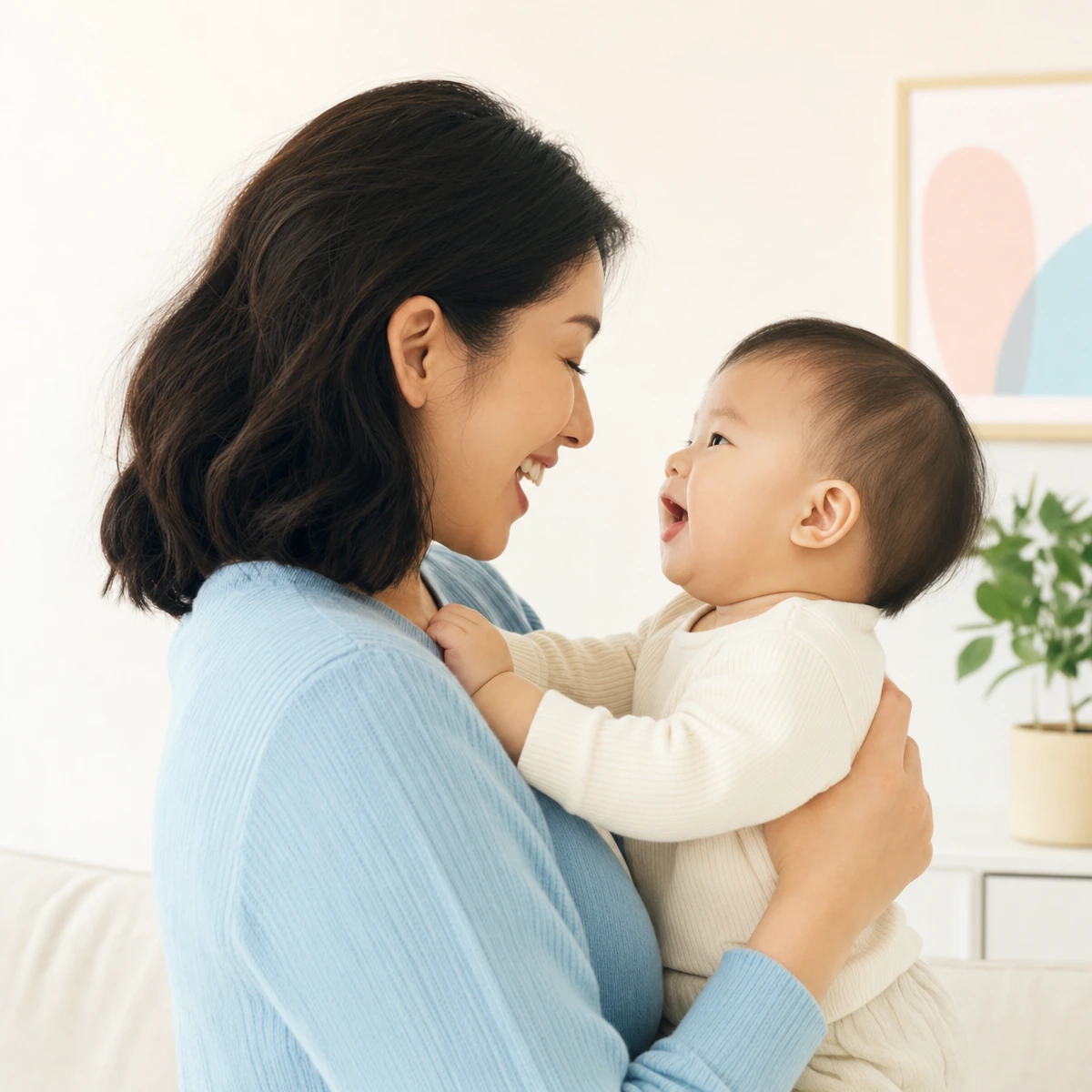
A child’s first word is a major milestone, and parents often wonder what it will be and when they will hear it.
If your toddler has not started talking yet, you may be wondering when those first words will come. Here is what to know about when babies typically say their first word, which first words are most common, and how you can help your child learn to talk.
At what age do toddlers typically start talking?
Babies usually say their first word at around 12 months. Some children say it a little earlier, while others say it a little later.
Before age 1, your baby may have said “mamama” or “dadada,” but you might not have been sure whether they meant a parent or were simply babbling. It is typical for babies ages 6 to 9 months to babble this way. By around age 1, however, they are likely using words such as “Mama” or “Dada” specifically for you.
As toddlers begin to say more words, they often start by labeling items. They may identify you, other relatives, or friends by name. They might also say “dog” when they see one on the sofa or “car” when they spot one through the window.
By 18 months, toddlers typically begin using words more purposefully and for a specific function. For example, they may use words to ask for something, saying “Milk?” or “Ball?” This shows that they are learning words can serve a purpose, an exciting milestone.
By 18 to 24 months, your child should have at least 5 to 10 words that they use regularly and spontaneously. Watch for these milestones as your child grows.
Free 30-minute evaluation
Looking for a speech therapist?
Talk through what you are noticing and get clear next steps.
Book free evaluation
What counts as a baby’s first word?
To count as a word, a child must use it consistently, independently, meaningfully, and intentionally. Several forms of communication can qualify as a first word, including:
- Complete words, such as “Mama” or “bubble”
- Word approximations, in which the child says part of a word, such as “wa” for water
- Animal sounds, such as “moo” or “meow”
- Environmental sounds, such as “beep” or “choo choo”
- Exclamatory words, such as “whee!” or “uh-oh!”
Signs count as words, too. For example, a baby might use the sign for “more” or “all done.” We discuss gestures and baby signs in more detail below.
Common first words for babies
A baby’s first words are often the names of familiar people or the objects and toys they interact with regularly. Because some of the earliest speech sounds children can pronounce are /m/, /b/, /p/, and /d/, words containing these sounds may come first.
Below are some common first words we hear from babies. Keep in mind that your child may not be able to pronounce the entire word yet. They might say “ba” for ball or “nana” for banana.
- Mama
- Dada/Papa
- Car
- Go
- More
- Please
- Help
- Eat
- Water
- Milk
- Bottle
- Banana
- Bubble
- Ball
- Hi/Bye
- Uh-oh
- Wow/Whoa
- No
- Stop
- Dog
- Baby
When should I be concerned if my toddler is not saying words?
If your child is 15 months old and has not said a first word, it could be a sign of a speech delay. Talk with your pediatrician and a speech therapist to find out whether a speech and language evaluation is needed.
Every child develops at their own pace. Still, it is important to pay attention to possible signs of a speech or language delay. If your child needs early intervention, the sooner they begin speech therapy, the faster they will make progress.
3 ways to help your baby say their first words
Babies learn a great deal from the people around them and the environments they experience. As their caregiver, you are well placed to help them learn to talk. Try these speech therapy techniques at home to support your baby’s first words.
1. Talk to your child throughout the day
One of the most helpful things you can do is simply talk to your child. Children need to hear language to learn it, so keep the conversation going.
Describe what you are doing as you move through the day, such as while making your toddler’s breakfast. You might say, “I’m slicing your banana. Now I pour the milk.” Let your child watch your actions as you talk so they can connect the words with what they see.
2. Read with your baby every day
Reading is important for young children. It introduces them to new words and speech sounds, and even helps them learn how grammar works.
The next time you share a book, name the pictures and talk about the verbs shown in them. Perhaps a child is sleeping or a dog is running. Say these vocabulary words aloud and repeat them several times. Sounding like a broken record is useful here. You might say, “See the dog? The dog is running. The dog runs. He’s a big dog. The big dog is running.”
Notice how “dog” and “run” appear several times. Repetition gives your child many opportunities to learn each word and perhaps begin saying it.
3. Encourage your child to imitate you
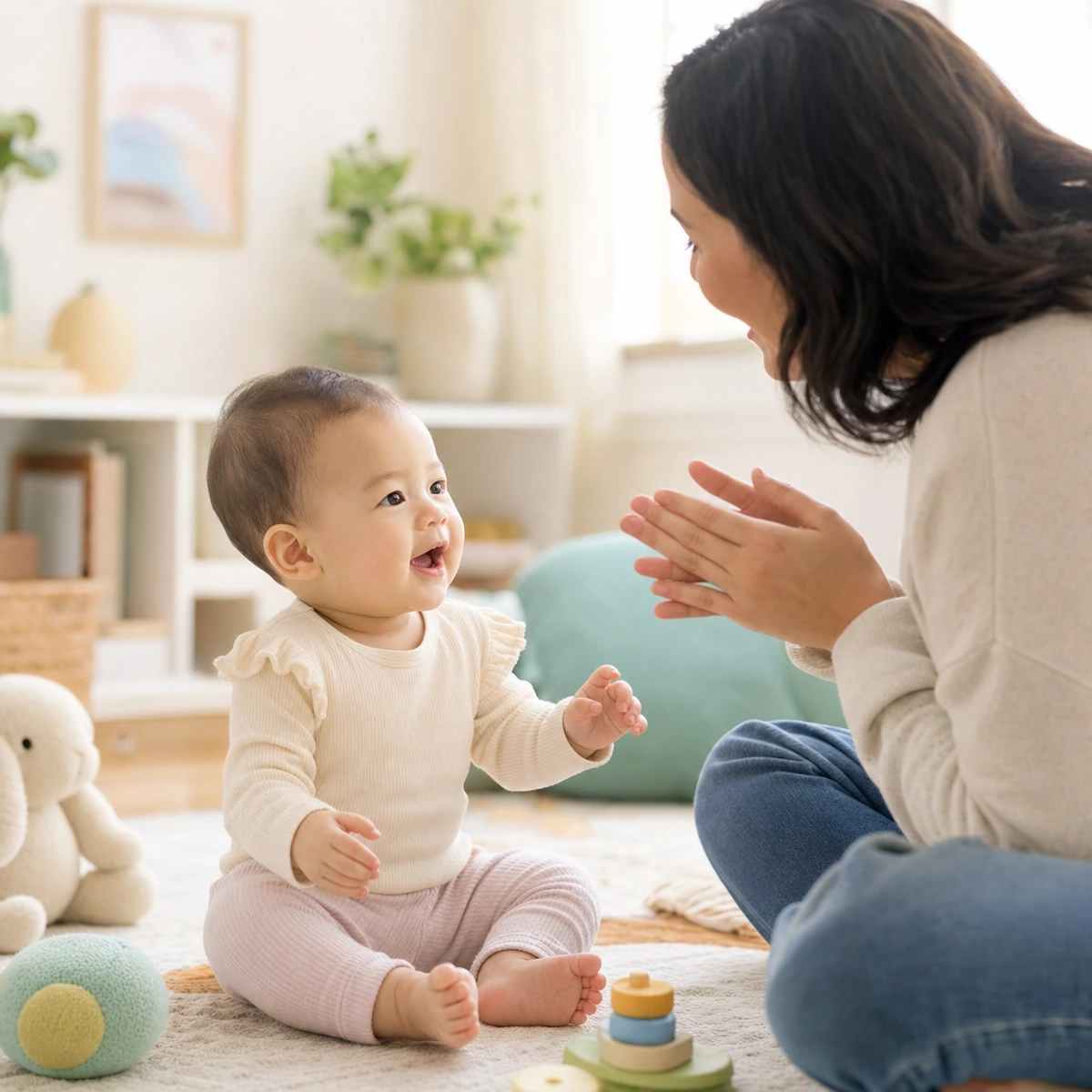
Imitating what they hear is one of the main ways toddlers learn to talk. But imitation does not have to begin with words. Encourage your child to copy hand motions from children’s songs such as “The Wheels on the Bus,” gestures such as clapping, or play actions such as stacking blocks. These activities can help your child understand the back-and-forth nature of communication. Then, when you start practicing the imitation of sounds or words, they will be ready to build those skills.
Learn more about the different types of imitation and how to practice them in this article.
Related guides




Before first words: Preverbal communication milestones to watch for
Speech and language milestones begin before a baby starts talking. This may surprise some people because the first-word milestone gets so much attention. But babies develop several preverbal language skills first. Because milestones build on one another, watching for these skills can help you tell whether your child may be getting ready to talk.
Using gestures and signs
Many babies begin using gestures and signs to communicate between 7 and 12 months. Teaching your baby to gesture can also help them develop verbal skills.
For example, one landmark study published in 2005 showed that children who first produced a gesture-and-word combination were able to combine words into short phrases more quickly. Combining words this way is a key milestone for 2-year-olds.
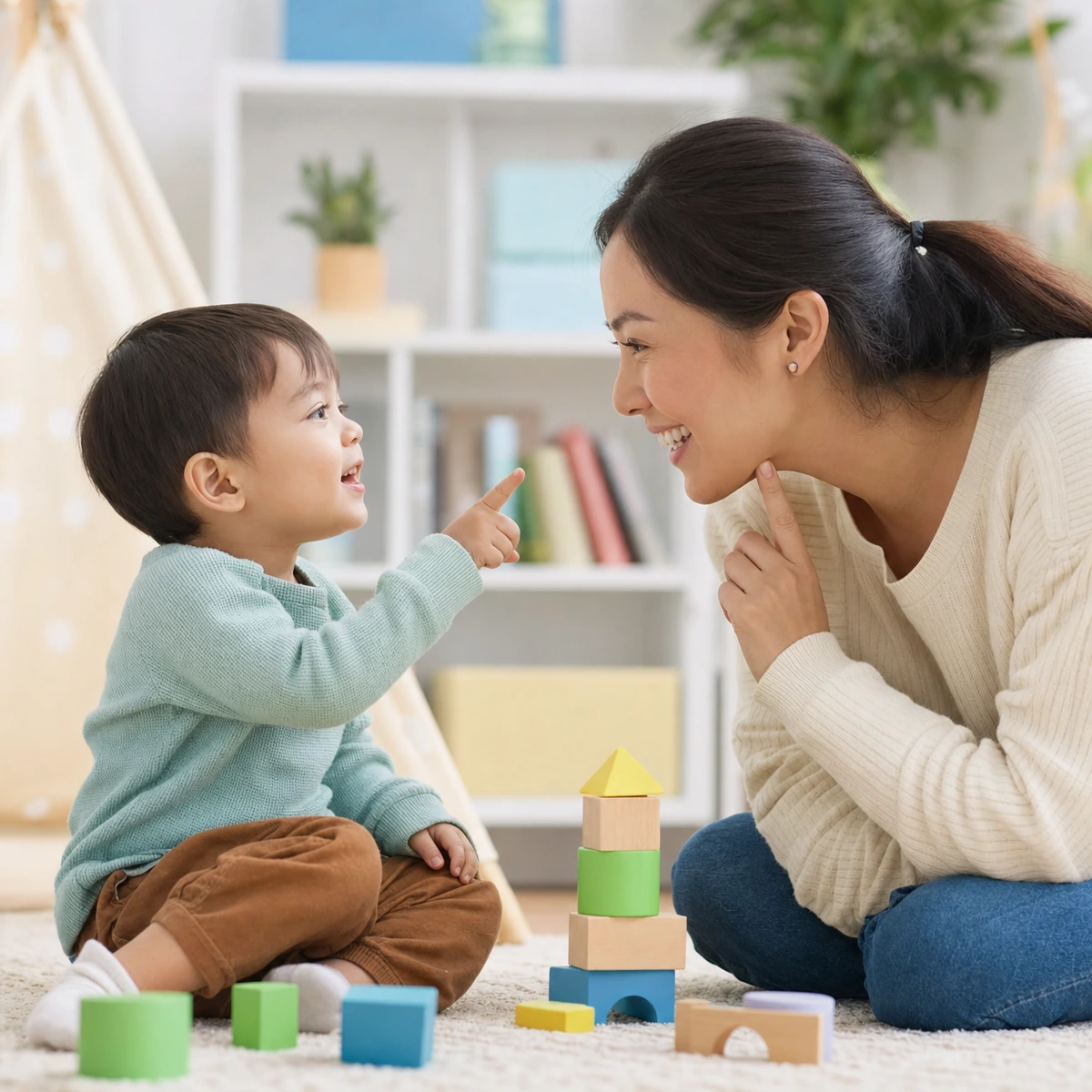
Pointing is one of the simplest and most effective gestures. Before babies can name an object, they may point to something they see or want to play with. Take time to demonstrate pointing, then practice it with your child.
You can also teach your baby signs to help them communicate their wants and needs. Functional words, such as “eat,” and the names of things your baby may want, such as “milk,” are good places to begin. Speech therapists recommend teaching your child signs for these words:
- More
- Eat
- Drink
- Please
- Help
- Milk
- Hungry
- Water
- All done
- Go
Joint attention
Between 9 and 12 months, a new kind of attention skill should begin to emerge. Joint attention happens when two people focus on the same object or task together. They may also shift their gaze toward each other.
For example, imagine you are at the playground preparing to put your child on a swing. Your child looks at you, then at the swing, and then back at you. They understand that you are getting ready to place them in the swing, or perhaps they hope you are, and they want you to know they are ready.
Joint attention is a major stepping stone toward learning to talk. Meaningful communication cannot occur without it. When two people communicate, they share a focus on something. If one person cannot pay attention to what is being said, the message will not come through correctly.
Even simple, early forms of joint attention are significant for your baby. They are some of the first steps toward communicating with another person.
Playing with toys appropriately
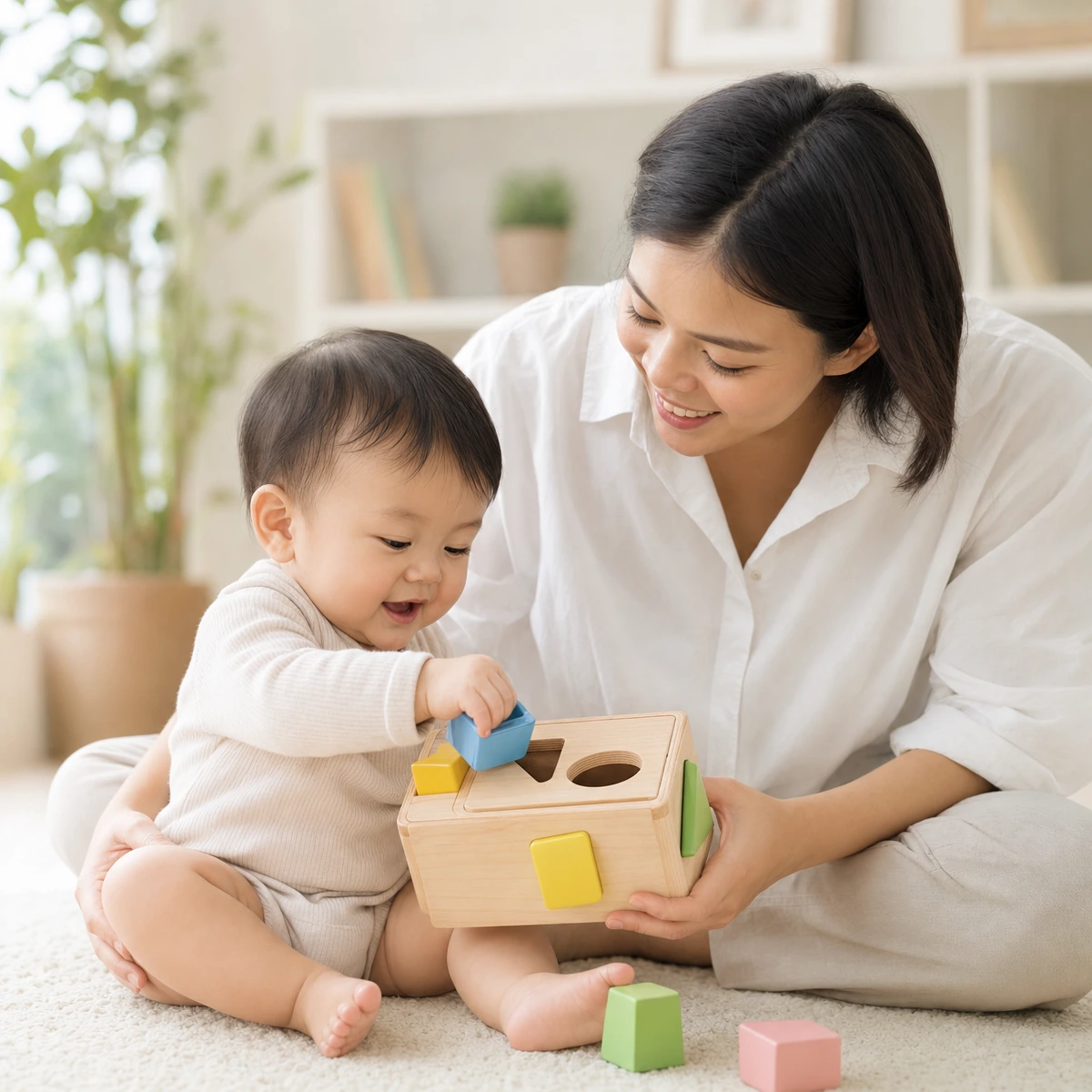
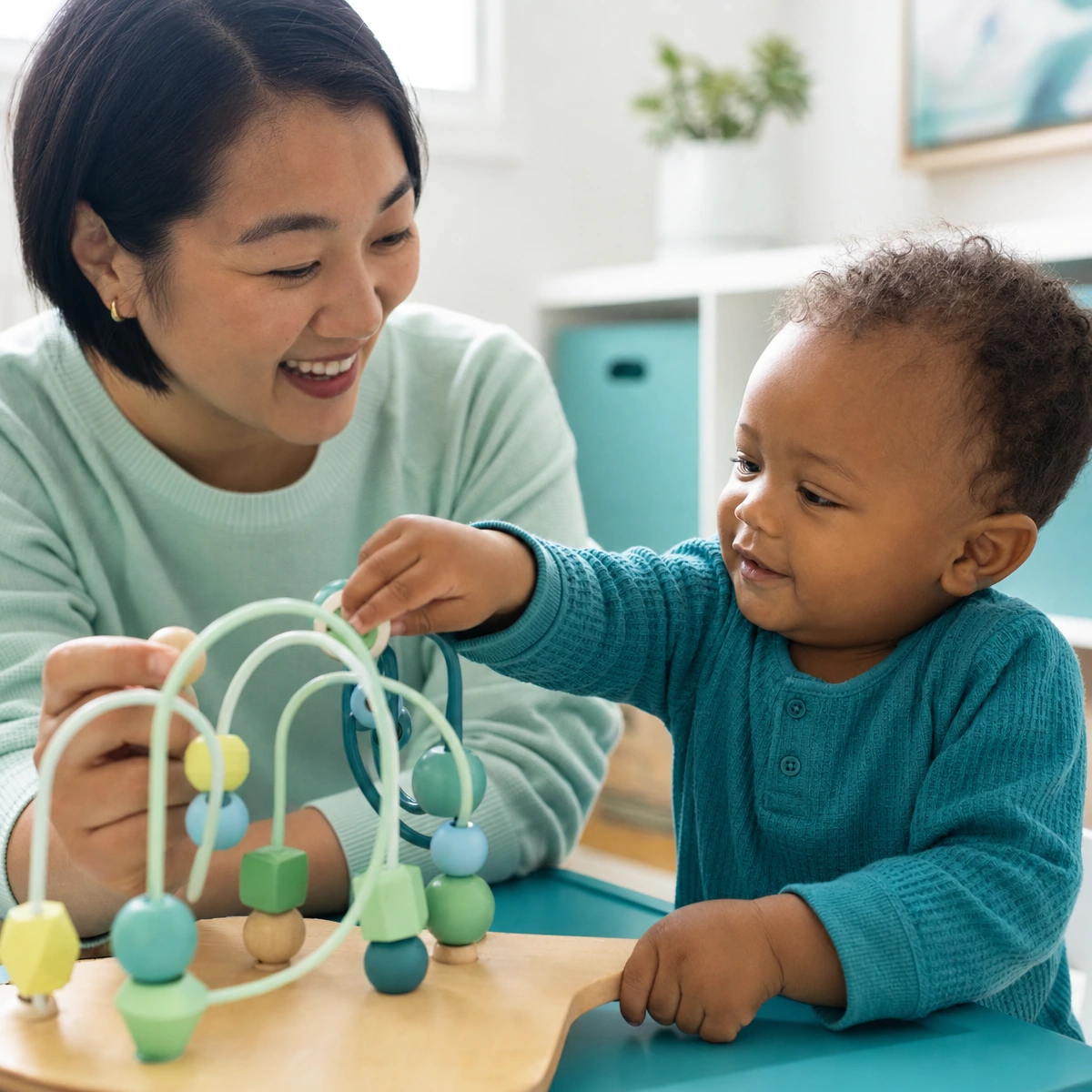
At around 9 to 12 months, your baby’s interest in toys should begin to shift from simply chewing on them to trying to play with them. Your child may attempt to place puzzle pieces where they belong, stack blocks, or push a toy car to make it move.
Play skills are an important sign of communication development. One of the most valuable concepts babies learn through play is cause and effect. When they knock over a tower, it falls. When they push a toy train, it moves along the track.
A child must establish an understanding of cause and effect before purposeful communication can occur. Although your child learns this concept through play, it relates to their ability to communicate. When we communicate with another person, we understand that doing so will have an effect. We order at a restaurant and receive the food we requested. Or we meet a friend we have not seen in a while, hear about their life, and share an update about ours.
Cause and effect underlies these more complex interactions as well as the simple play your child enjoys.
How to tell whether your toddler needs speech therapy
If your child is 15 months old and has not said a first word, or seems behind in the skills covered in this article, consider contacting a speech therapist. A speech therapist can evaluate your child and determine whether early intervention is needed.
You can also use our free online screener to find out whether your toddler might benefit from an evaluation. The questions are tailored to your child’s age, and you will receive detailed results within minutes.
Contact us here to be matched with a speech therapist who has experience working with toddlers. We are here to support you and your child throughout the process.
Frequently asked questions
At what age do babies typically say their first words?
Children usually say their first word at around 12 months. Some children say it a little earlier, while others say it a little later. By 18 to 24 months, your toddler should have at least 5 to 10 words that they use regularly.
When should I be concerned that my toddler is not talking?
Every child develops at their own pace. However, if your child is 15 months old and has not said a first word, this could be a sign of a speech delay. Talk with your pediatrician and a speech therapist to determine whether a speech and language evaluation is needed.
How can I help my baby learn to talk at home?
Parents can do a lot to support early speech. Talk to your child throughout the day, read books together every day, and encourage your toddler to imitate your actions and sounds. Visit our YouTube library for simple demonstration videos that show you what to do.