
Babies and toddlers
When Do Babies Start Talking? A Guide to Milestones and Red Flags
When do babies start talking? Learn what to expect each month, when to seek an evaluation, and how to encourage your baby to speak at home.
Communication begins before first words. Astrel helps families nurture connection, understanding, gestures, vocabulary, and early sentences through play and familiar routines.
Book free evaluationBabies and toddlers build language through shared attention, gestures, sounds, imitation, turn-taking, and understanding long before they use many words. Looking at all of these skills gives a fuller picture than counting words alone.
Families may seek guidance when a child uses few gestures or words, has difficulty understanding familiar language, becomes frustrated when communicating, or is making less progress than expected. An evaluation can provide context without assuming that one behavior has a single cause.
Young children do not need to sit still in front of a screen for therapy to be useful. A caregiver can play, read, sing, or move with the child while an SLP observes and coaches. Activities can use the child's own toys and interests so new communication has an immediate purpose.
Share what you are seeing and learn whether monitoring or a fuller evaluation may be useful.
Caregivers can practice by following the child's lead, modeling short phrases, pausing to create space for a response, and treating gestures or sounds as meaningful attempts. These strategies can fit into meals, bath time, books, getting dressed, and outdoor play.
Families can notice changes in gestures, shared attention, understanding, sounds, and word combinations instead of repeatedly asking a child to perform. Brief notes about new skills and difficult situations can help an SLP adjust guidance while keeping play and connection at the center.
Online care can center on live caregiver coaching while a toddler plays and moves in a familiar space. A hearing screen, pediatric or developmental review, feeding assessment, or in-person evaluation may be needed when there is loss of skills, limited response to sound, feeding difficulty, or concern across several areas of development.
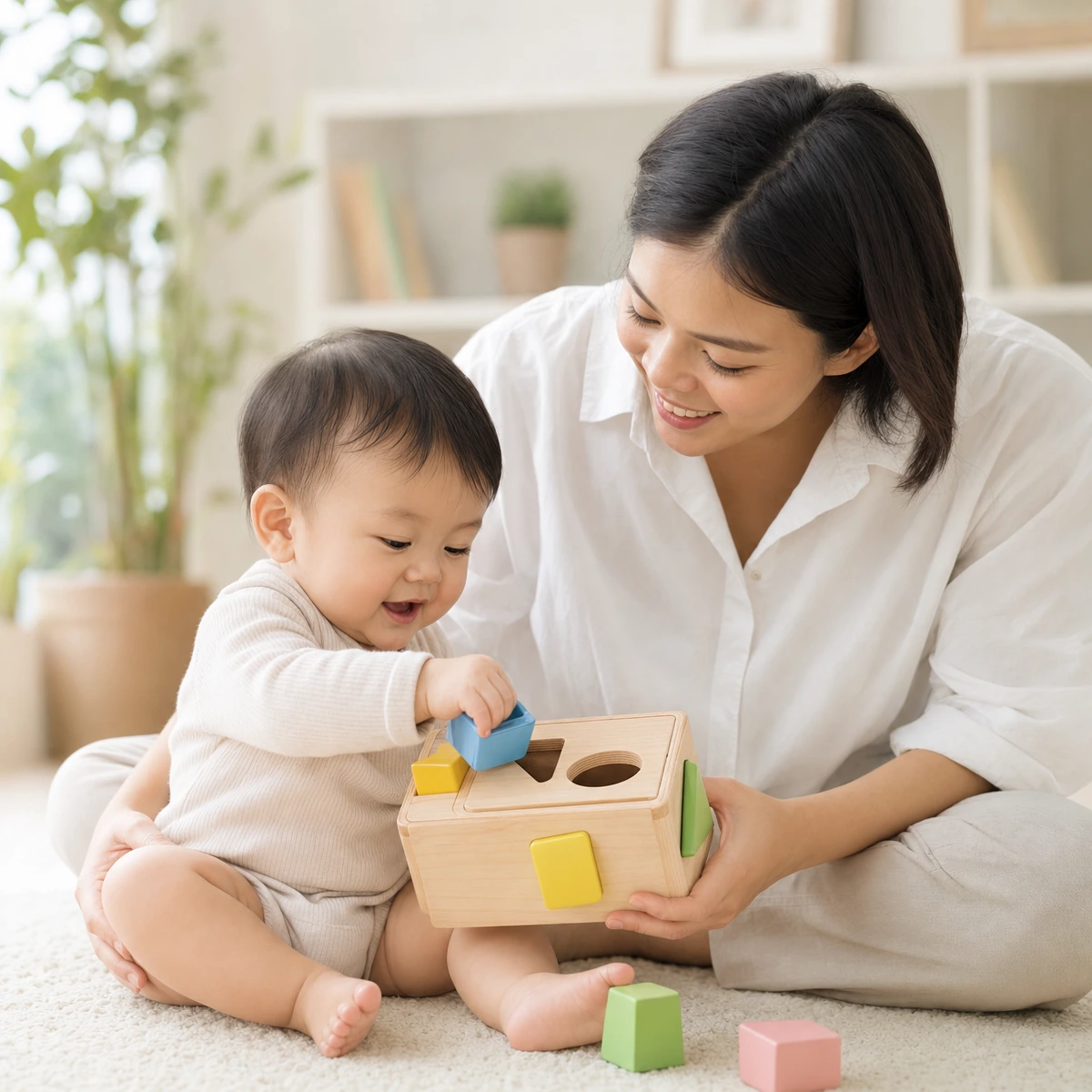
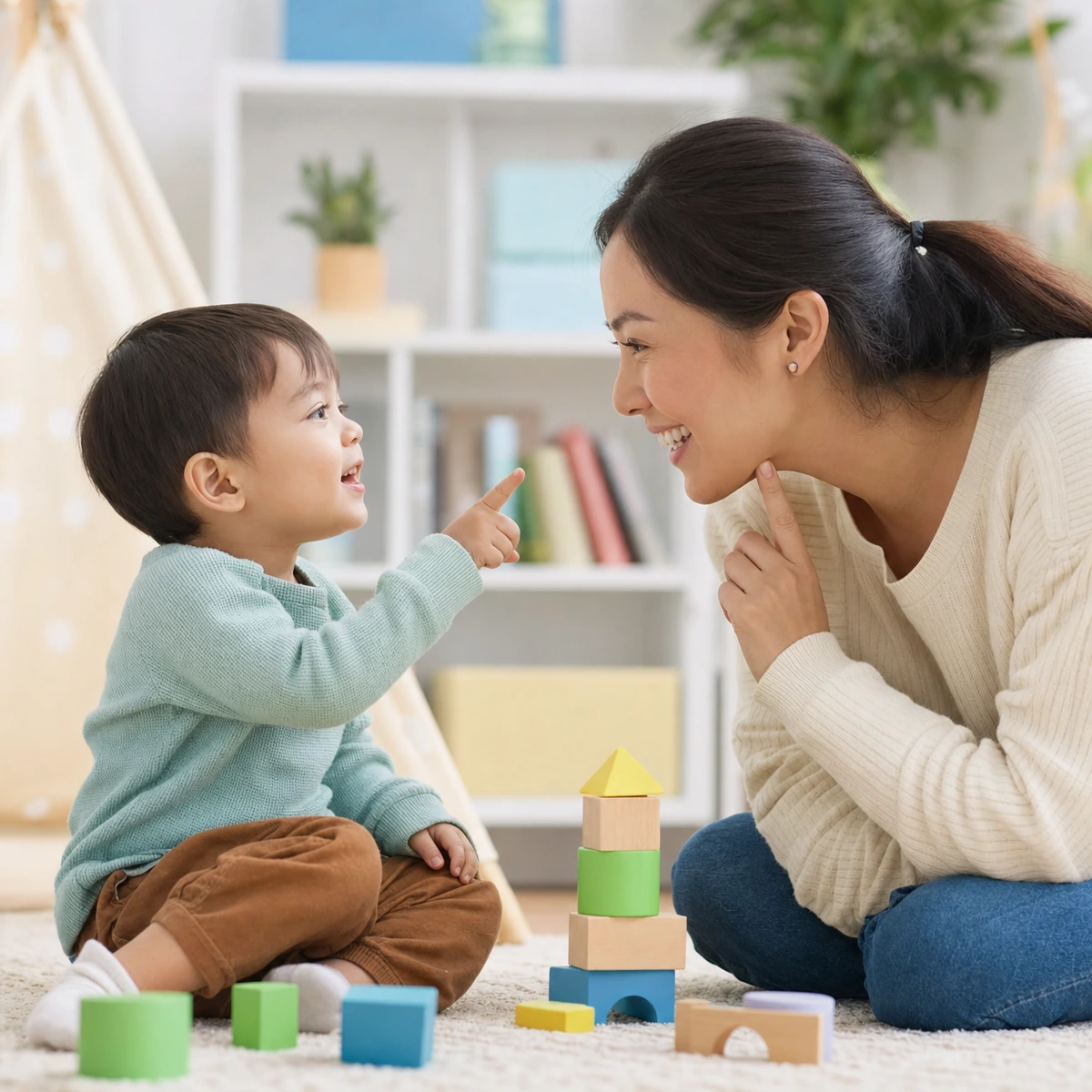
Early support can begin in infancy when appropriate, often through coaching that helps caregivers support communication during ordinary routines.
No. The child can move and play while the caregiver interacts with them and the SLP offers real-time guidance.
An SLP may suggest simple strategies for play, meals, books, bath time, or other routines based on the child's current communication.
Start with a free 30-minute evaluation and leave with a clearer next step for your child.
Book free evaluation