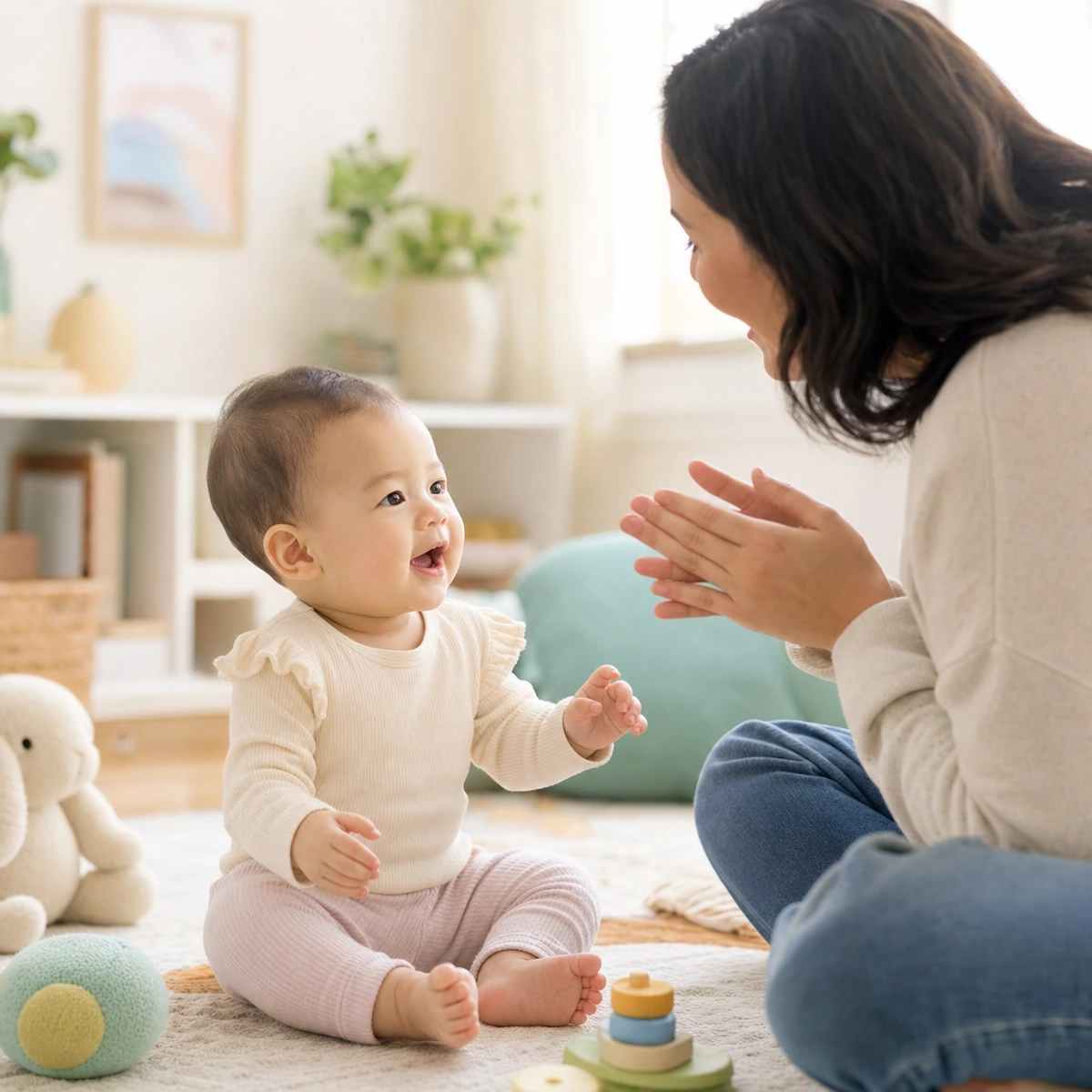
Is it worth reading a picture book to your 3-month-old, chatting with them as if you were having coffee with a friend, or naming every food you put in the grocery cart? Yes, even when your baby does not respond. But when do babies start talking? Most children say their first word around 1 year old. Until then, you can support their growing ability to communicate in plenty of enjoyable ways. Babbling back and forth with your baby is a great place to start.
When my first baby said his first word, “car,” the timing seemed just right. My second son spoke his first word later, and as I waited and encouraged him, I began to worry. Then, during an impromptu bubble-blowing parade in our backyard, he said, “Bub-a.” Bubbles! I felt both delighted and relieved. What I did not realize was that he had been on schedule all along. I simply did not understand everything that can “count” as a word.
So when do babies usually say their first word? This guide explains what to expect.
How to use this guide
Parenthood can feel stressful, especially when you want the very best for your baby. This guide is designed to ease some of that pressure. Here are a few ways to use it:
- Find your baby’s age range, review the typical milestones, and pick one or two strategies to try this week.
- Keep a simple home log of new sounds, gestures, and words.
- Watch for patterns over several weeks. Development does not always move in a straight line.
What counts as “talking” before words?
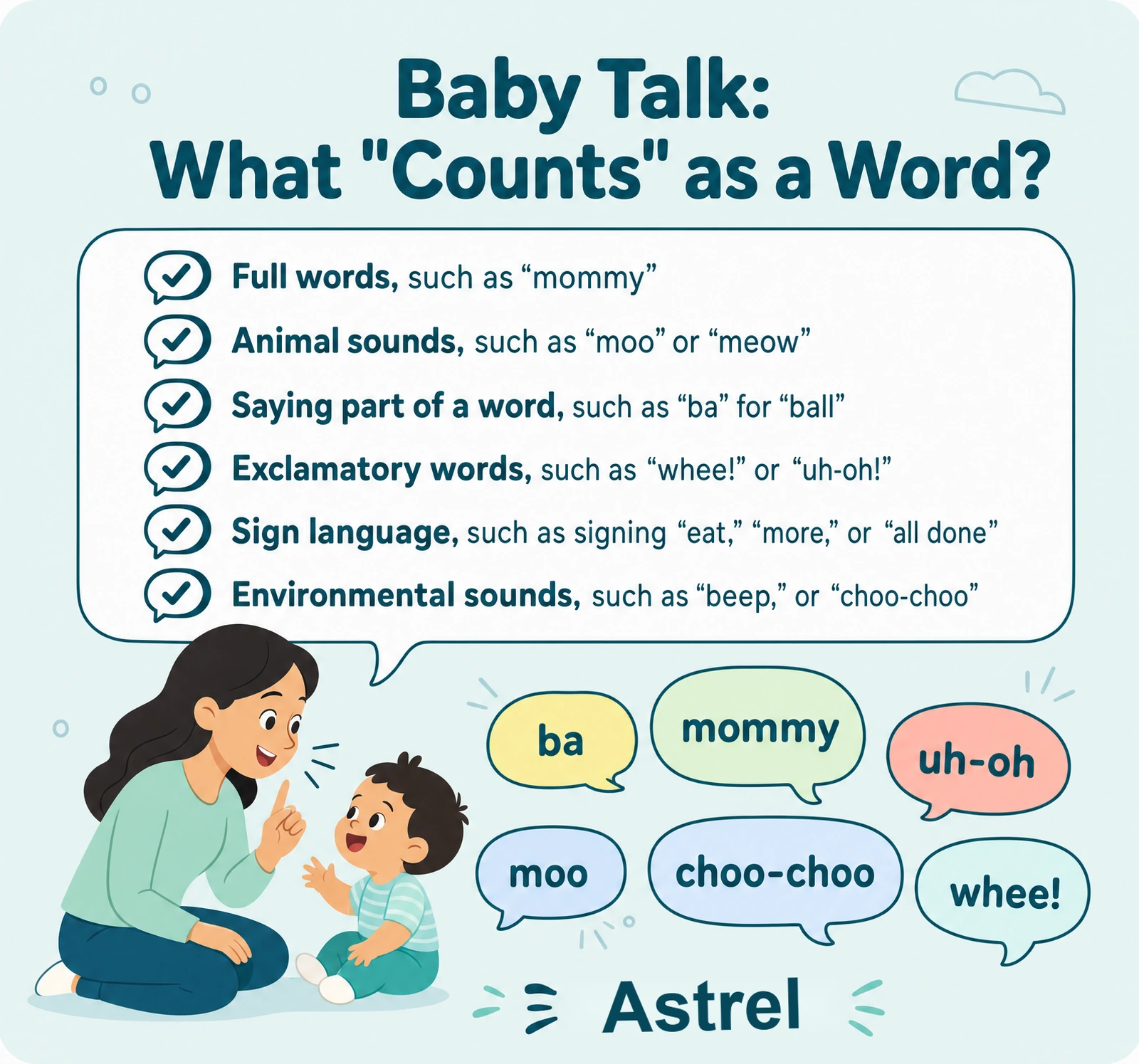
Babies communicate in many ways before they begin using full words. Knowing that would have eased much of my anxiety about my son. Each of the following can “count” as a word:
- Complete words, such as “mommy”
- Animal sounds, such as “moo” or “meow”
- Part of a word, such as “ba” for “ball”
- Exclamatory words, such as “whee!” or “uh-oh!”
- Sign language, including signs for “eat,” “more,” and “all done”
- Environmental sounds, such as “beep,” “choo-choo,” and “ding-dong”
To count as words, children need to use these forms consistently and intentionally. For example, your child might say “meow” whenever they see the family cat.
Talking timeline: When do babies say their first words?
At what age do babies begin talking? If you keep a baby book, the first-word page is an important one, and the moment is certainly worth celebrating. “The first word is such an exciting milestone,” says Hamshi Ganjam, a speech-language pathologist with Astrel.
Babies begin talking at different times. Ganjam offers this general timeline:
- 0-6 months: Cooing, laughing, squealing, and making vowel-like sounds
- 6-9 months: Babbling with sounds such as “mamama” or “dadada”
- 9-12 months: Imitating sounds such as “vroom, vroom” or “moo,” and using simple gestures such as waving “hi”
- 12 months: Baby’s first word! It could be almost anything. Common first words include Mama, Dada or Papa, car, go, more, please, help, eat, milk, bottle, banana, bubble, and ball.
- 12-18 months: Naming and labeling people or objects , such as saying a friend’s name
- 18 months: By this point, toddlers use words more intentionally to request something, such as “cookie?”
- 18-24+ months: Toddlers regularly use five to 10 words. They may also begin using simple two-word phrases such as “I want” or “more please.”
What age do babies start talking? Quick answers for parents
As noted above, many babies say their first word around 12 months. Some speak before their 1-year birthday, while others say their first word afterward. Both can be normal. By around 24 months, toddlers typically begin using two-word phrases.
What affects when a baby starts talking?
A first word does not appear out of nowhere. Language development begins soon after birth. “The building blocks of communication emerge in the newborn stage, believe it or not!” says Stephanie Cohen, M.A., CCC-SLP, CLC, a speech-language pathologist and author of the My First Learn-to-Talk board book series. “As parents hold their infants and talk to them sweetly, infants begin to learn how to turn on their voices and respond,” she says.
Keep in mind that the “normal” range for beginning to talk is broad. “Every child is an individual,” says Cohen. Several factors shape communication development:
- Genetics
- Your child’s growth
- Medical factors, including hearing health
- Your child’s environment
Caregivers can influence a baby’s learning environment. Research indicates that young children who hear more adult speech develop more speech themselves. Hearing a toddler chatter away is positive, even if you cannot understand what they are saying. “Little ears are listening to the adults around them, who talk in full sentences and have conversations. This is our toddler’s attempt to imitate us before their little mouths are able to converse using words in sentences,” says Cohen.
The practical takeaway is simple: Talk with your baby and toddler at home. The strategies below can help.
Ways to encourage talking at home
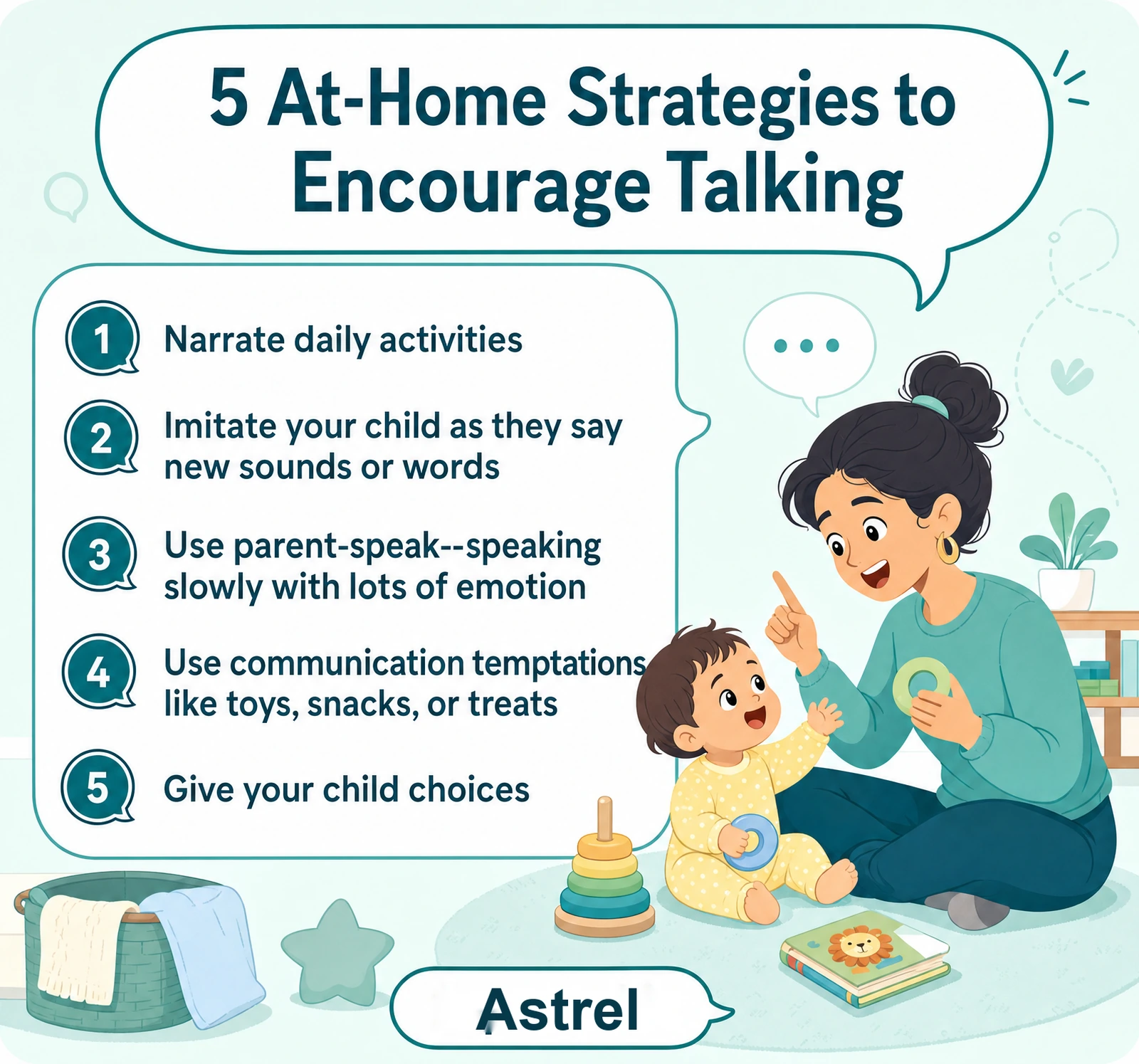
You cannot control every influence on speech development, including your child’s genetics. You can, however, use several strategies at home to support talking. “We know that a language-rich environment supports communication development. This means caregivers talk with their infant or toddler often, respond when their child communicates, and regularly use books during daily routines,” says Cohen. Our experts recommend the following approaches:
1. Narrate everyday activities
Example: “Let’s go get your shoes. It’s time to get in the car.”
2. Imitate your child’s new sounds and words
Example: If your child tries to say “banana,” respond with, “Yes! B-b-ba-na-na.”
3. Use parent speak
This style of speech is also called “parentese.” It involves speaking slowly, with plenty of emotion and a sing-song voice.
Example: “Eww, stinky diaper!” or “Peek-a-boo, I see you!”
4. Create communication temptations
Example: Offer your child a toy, snack, or treat. Prompt them to use a word such as “help” or the item’s name before receiving it. If they do not say a word, give it to them anyway. The goal is simply to build a pause between offering the item and handing it over.
5. Offer choices
Example: Give your toddler two specific choices: “Do you want crackers or a banana?” If your child points or reaches, respond, “Crackers? Mmmm, you want crackers.”
Receptive and expressive language
Communication involves much more than speech. It is also important to notice your baby’s other communication skills. This is where receptive and expressive language come in.
You may hear these terms often, but caregivers may not know exactly what they mean or why they matter. Here are the definitions.
Receptive language: Think of this as understanding. A child understands sounds, words, questions, facial expressions, and gestures. The ability to understand language develops before the ability to use it.
Expressive language: Think of this as using language. A child communicates with other people through words, gestures, and sounds.
Understanding these terms can help you recognize a possible concern. Trouble understanding speech may signal a receptive language disorder. Difficulty finding the right words while speaking may indicate an expressive language disorder.
Milestones and warning signs: When to seek an evaluation
Children develop on their own timelines, but you know your child best. If something concerns you, seek help from a professional.
“By 15 months, most children have said their first word,” says Ganjam. “Between 18 to 30 months, toddlers should be using new words regularly. They should also be starting to combine words into short phrases like ‘more milk’ or ‘bye-bye mommy.’ If a child hasn’t reached these milestones, talk to a professional. Your child’s pediatrician or a speech therapist can provide an evaluation.”
Ganjam also recommends requesting an evaluation if your child:
- Is not learning or using new words
- Has difficulty imitating sounds or words
- Rarely communicates with gestures, such as pointing or waving
- Seems to have trouble understanding simple directions
- Becomes very frustrated when trying to communicate
For a clearer picture of whether your child is on track, review our milestone checklists by age:
- 0-12 months
- 12-24 months
- 2 years
- 3 years
You can also complete our free online screener to learn whether your toddler might benefit from an evaluation. The questions are tailored to your child’s age, and detailed results are available within minutes.
Related guides




What happens during a speech-language evaluation?
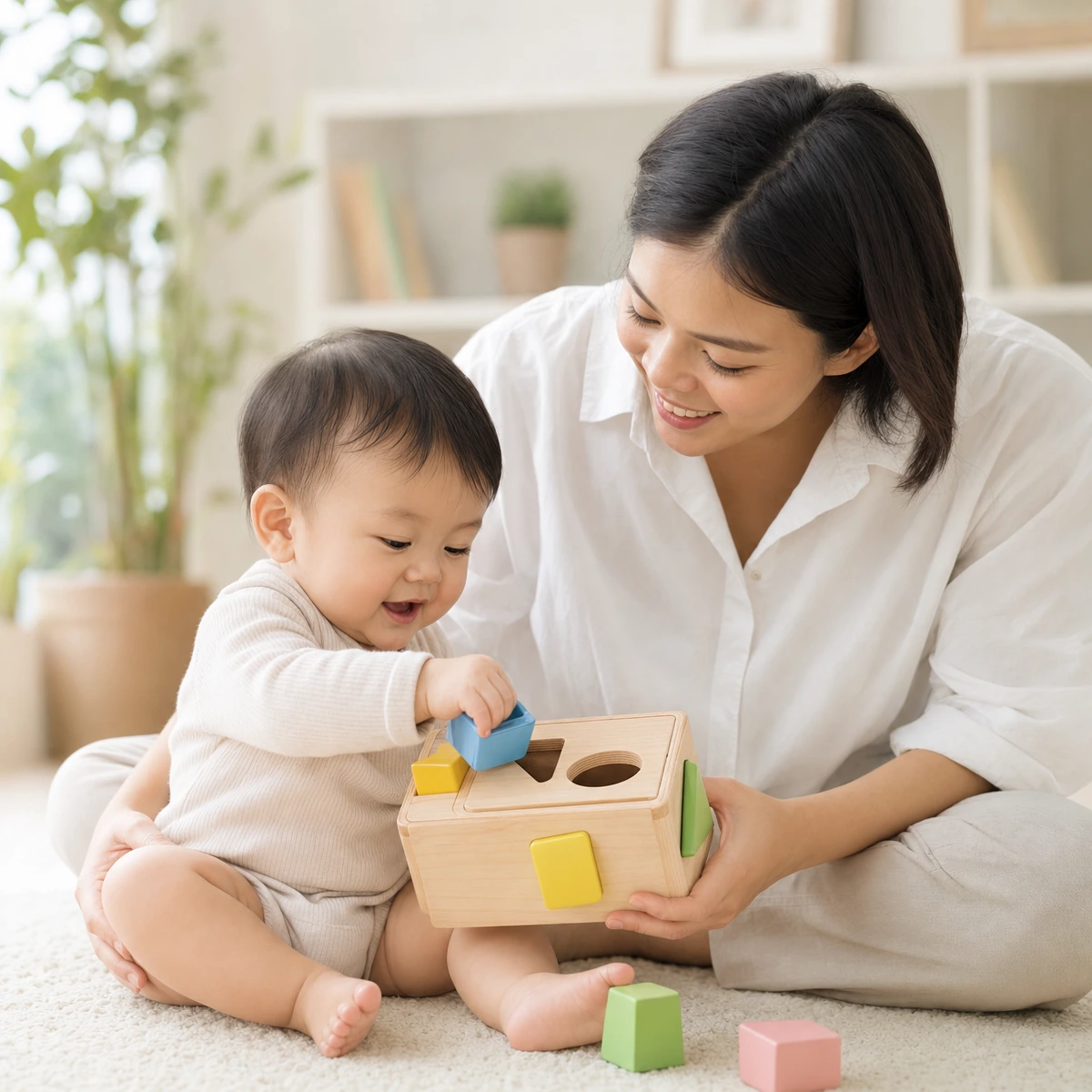
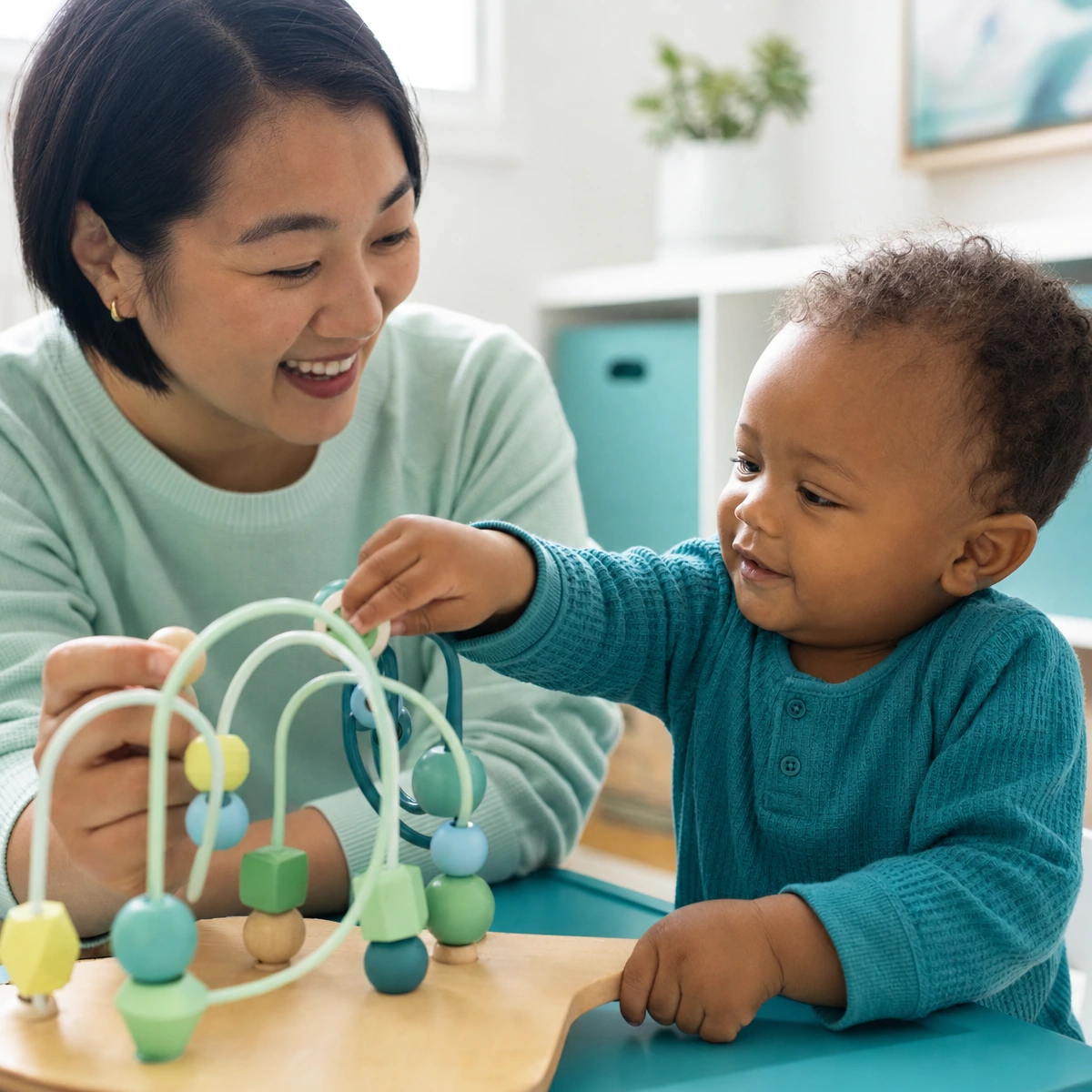
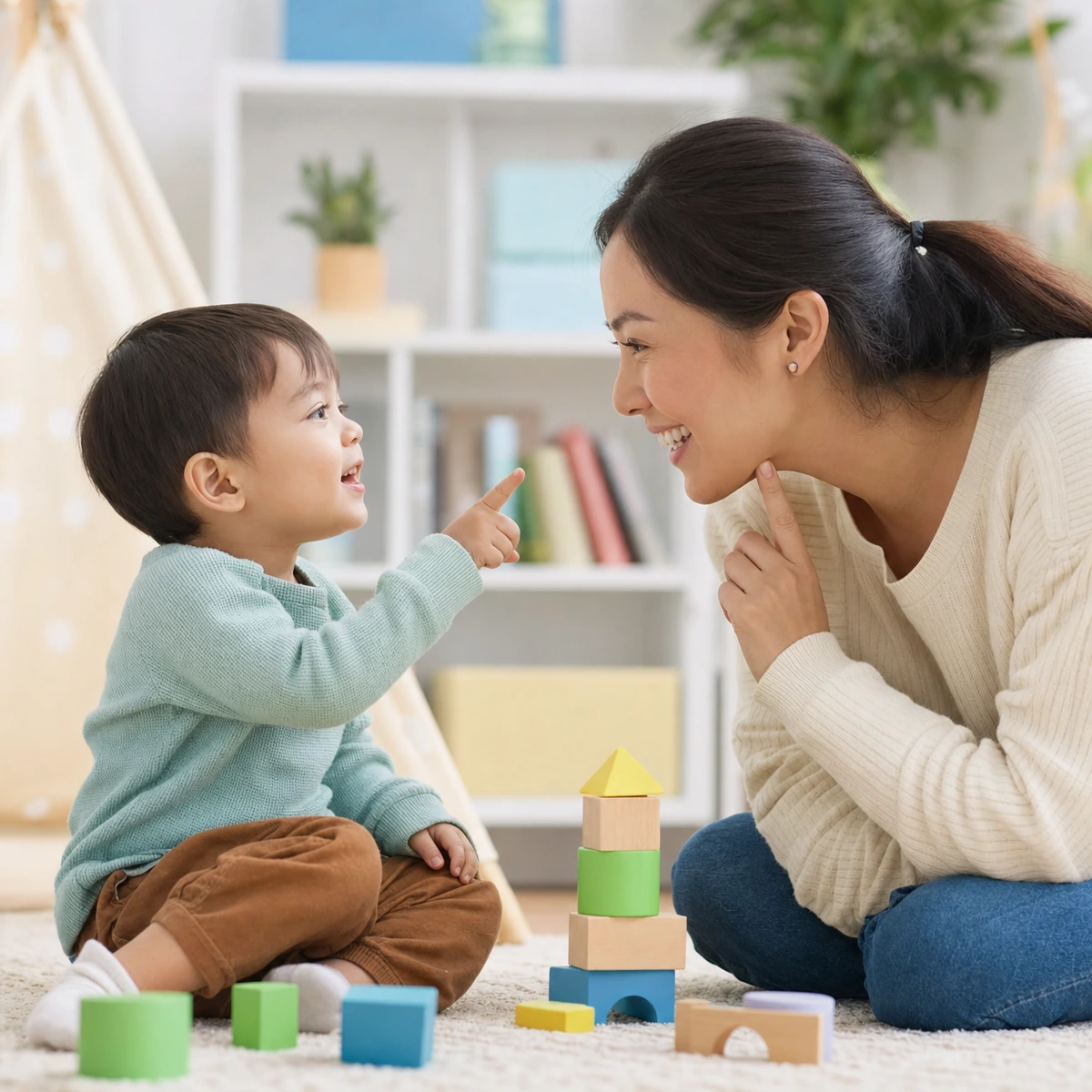
If you feel nervous about a speech-language evaluation, it may help to know what to expect. With the right speech therapist, the appointment should go smoothly. You can also choose an in-person or virtual visit based on your needs. In either setting, the therapist is there to support you and your child if help is needed.
“The main goal of a speech-language evaluation is to get a good picture of how the child is currently communicating and see if speech therapy would be helpful,” says Ganjam. “It’s a very family-centered process. Both the caregiver and the child will be involved in the appointment,” she adds.
During the evaluation, you can expect to:
- Complete a brief questionnaire about your child’s medical history, daily routines, and your primary concerns.
- Watch your child play and interact with the speech therapist. “We may bring out toys, books, or bubbles and watch how the child responds, makes sounds, uses gestures, or plays with their caregivers,” says Ganjam.
- Answer questions about the communication you observe at home. This is known as a caregiver interview.
“Our goal is to help caregivers feel confident in understanding their child’s communication,” says Ganjam. The speech therapist will also discuss the next steps with you. “Even if your child just needs a little extra support, early speech therapy can help them build strong communication skills for years to come,” she says.
Read more about Astrel’s approach to evaluating and treating babies and toddlers in our early language treatment guide.
How to work with your child’s other caregivers
Working with other caregivers can give your child more consistent communication support. “Caregivers play such an important role in helping everyone on a child’s team stay on the same page,” says Ganjam.
Talk with your child’s daycare teacher about the words, signs, and gestures your child uses. For example, your child may sign “more” when they want additional food, or point when they want something.
Ask your speech therapist for strategies you can share with other caregivers. For example, everyone can agree to use the same gesture, word, or visual cue to help your child learn and make communication easier. “It really is all about teamwork. The more consistent communication support the child gets across settings, the faster they’ll make progress and the more confident they’ll feel expressing themselves,” Ganjam says.
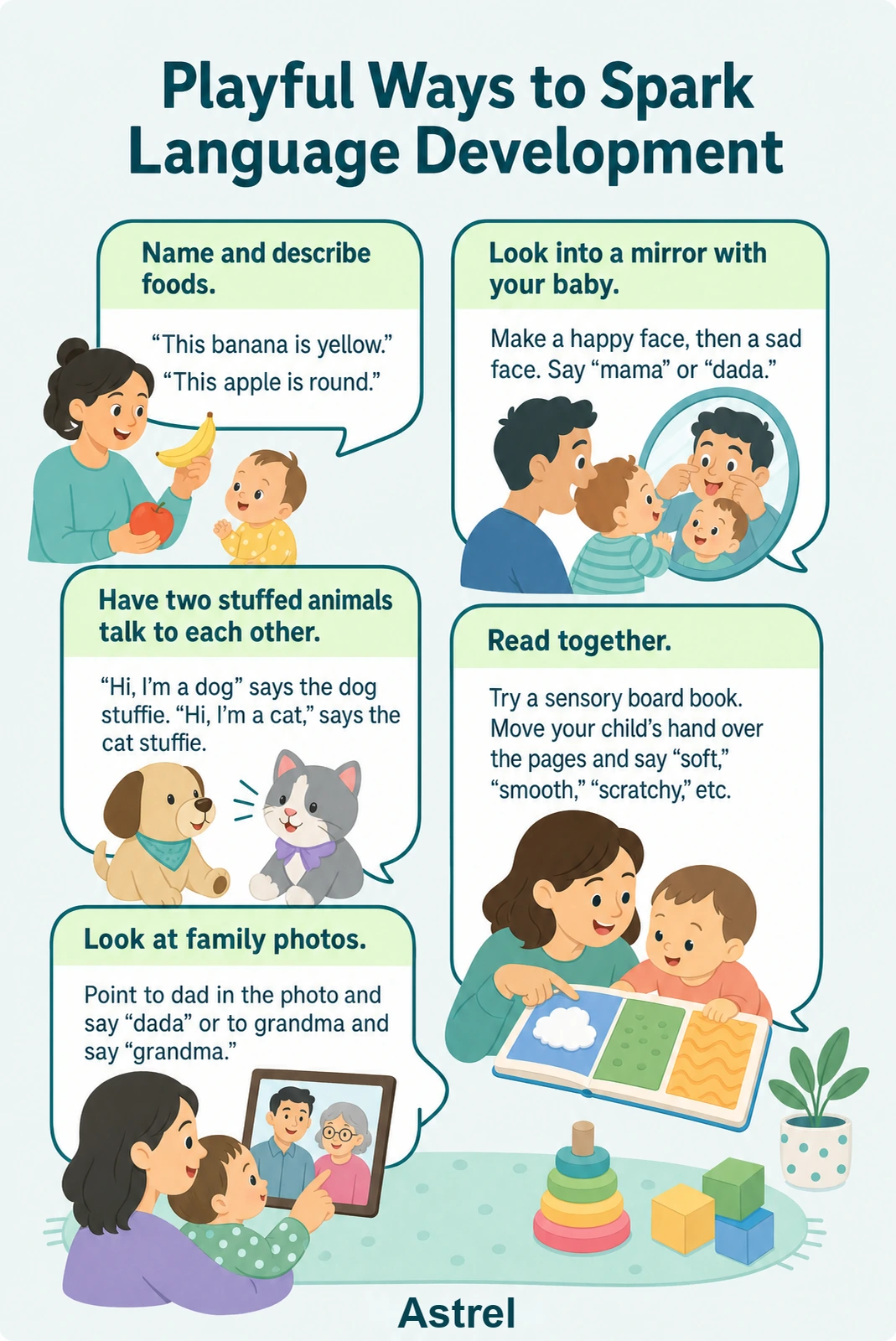
Everyday supplies and activities
You almost never need special materials to support your child’s language development. Daily routines, toys, and books you already have at home offer plenty of opportunities to communicate:
Name and describe food.
Example: “This banana is yellow.” “This apple is round.”
Look in a mirror with your baby.
Example: Make a happy face, followed by a sad face. Say “mama” or “dada.”
Make two stuffed animals talk to each other.
Example: “Hi, I’m a dog,” says the dog stuffie. “Hi, I’m a cat,” says the cat stuffie.
Read a book together.
Example: Read a sensory board book at bedtime. Guide your child’s hand over the fur and say “soft,” or over the ball and say “smooth.”
Explore family photos.
Example: Point to dad in a photo and say “dada,” or point to grandma and say “grandma.”
Frequently asked questions
How early can a baby begin talking?
Babies typically say their first word around 12 months, but the timing varies. Some begin talking before 1 year, while others start later.
Do children who talk early have a higher IQ?
There is no strong research showing that children who talk early have a higher IQ. Research does show that talking and interacting with young children is associated with stronger cognitive and language skills later in childhood.
What does it mean to be a late talker?
A child may be considered a late talker if they have not said their first word by 15 months or are not using short phrases by 30 months. A speech evaluation can help determine whether the child meets the criteria for a late talker.
Is it OK if a 2-year-old is not talking?
Every child is different, but babies often say their first words around 1 year old. If your toddler has not spoken their first word by 15 months or is not regularly using new words, talk with your pediatrician. Your child may benefit from a speech therapy evaluation.
Do boys usually start talking later than girls?
Yes. Research shows that girls tend to say their first words and sentences at younger ages than boys. Girls also have larger vocabularies than boys in their early communication.
Are younger siblings more likely to be late talkers?
Possibly. Some research suggests that younger siblings develop language more slowly than children who have two or more older siblings. They may also have smaller vocabularies at 18 months.
Key takeaways
- Babies usually say their first words around 12 months.
- Babies communicate in many ways. Full words, sounds, parts of words, and sign language can all “count” as talking.
- Caregivers can encourage babies and toddlers to talk by narrating everyday activities, using a sing-song voice, and imitating new sounds or words.
- If your baby has not said a first word by 15 months, speak with your pediatrician or a speech therapist.
- Play-based speech therapy can support your child’s language development. A speech therapist can also suggest strategies for you to use at home.
Free 30-minute evaluation
Looking for a speech therapist?
Talk through what you are noticing and get clear next steps.
Book free evaluation