


When your child eats only a small number of foods, especially foods such as chicken nuggets or Goldfish crackers, you may feel as though you’re failing. As parents and caregivers, we’re responsible for nourishing our children and helping them grow. But that can feel impossible when they won’t even try the food on their plate.
First, know that you are not failing. In many cases, what looks like “picky eating” is more complex. Some feeding problems stem from sensory issues. Learning about sensory food aversion can help you understand what your child may be experiencing at mealtimes. In many cases, sensory feeding therapy can ease some of the stress and help your child try a wider range of foods.
What is a sensory-based feeding disorder?
A sensory feeding disorder, also called sensory food aversion, is diagnosed when a child has trouble eating because they are sensitive to the smell, appearance, texture, taste, and/or sound of food. These sensory sensitivities create significant feeding challenges and often restrict the range of foods a child will eat. This can affect their nutritional intake and growth.
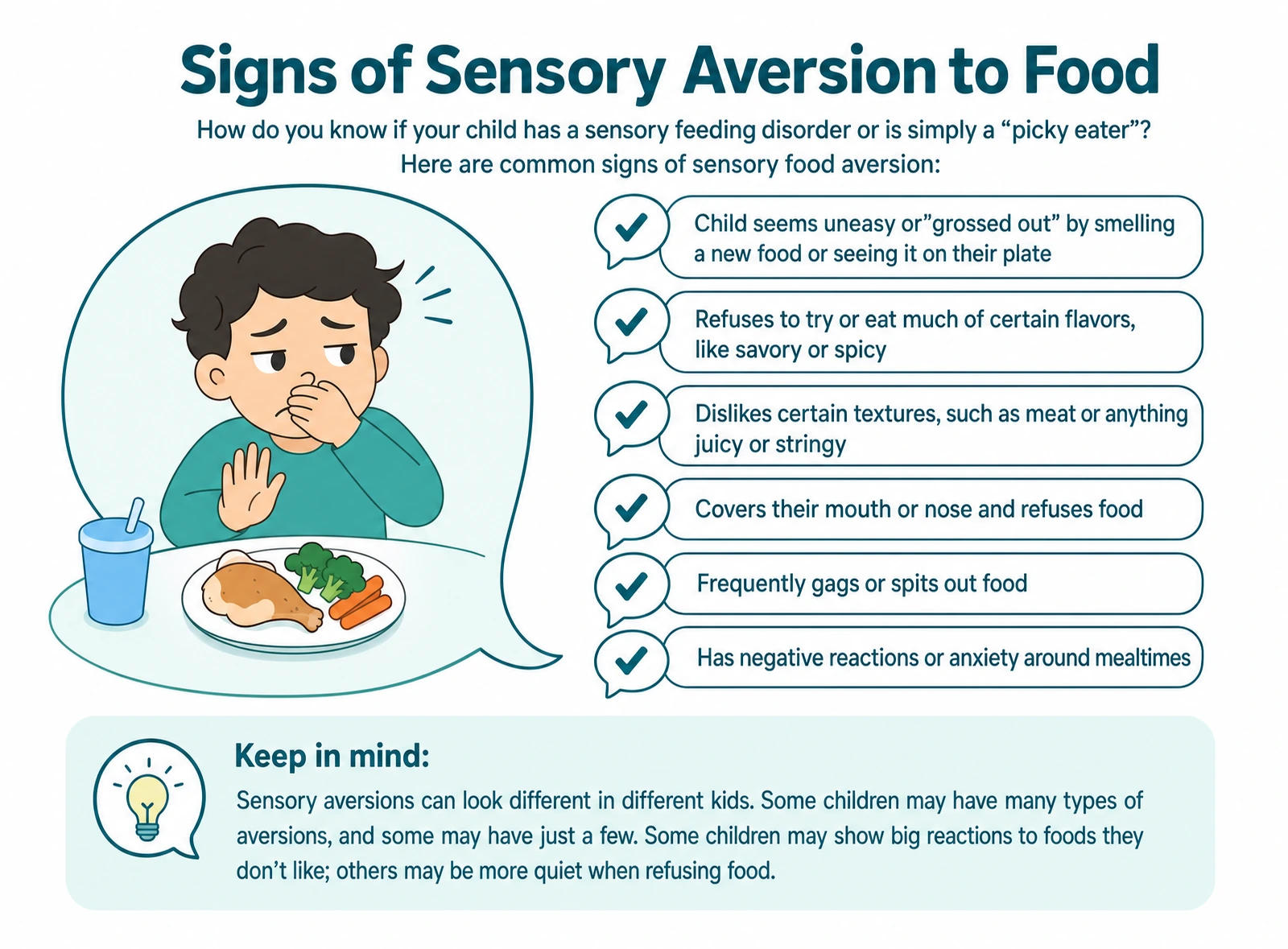
Signs of sensory food aversion in children may include:
- Selective eating, meaning the child limits their diet to a narrow range of preferred textures, tastes, colors, or even brands
- Avoiding particular foods, textures, or entire food groups, which can affect overall nutritional intake
- Being highly sensitive to sensory qualities of food, including smells, tastes, temperatures, or textures
- Anxiety or distress at mealtimes
- Slow or poor weight gain, if feeding challenges continue
A child with a sensory feeding disorder may feel anxious or afraid around new foods. They may become upset when a non-preferred food is placed nearby. They might gag, refuse to eat, or run away from the table.
Free 30-minute evaluation
Looking for a speech therapist?
Talk through what you are noticing and get clear next steps.
Book free evaluation
Understanding sensory food aversion
Caregivers often describe children with food-related sensory issues as anxious, worried, or stressed. For these children, mealtimes can be extremely difficult.
This is not the same as the typical toddler stage of “picky eating.” The worry these children feel is real. Their behavior is a way of communicating how they feel.
The worry these children feel is real. Their behavior is a way of communicating.
Parents and caregivers need to understand that their child did not choose to be this way. These fears may not seem logical to us as adults, but they are real and deeply personal to the child. We need to believe them. (If you have a moment, visit this website and read the grasshopper story. Feeding therapists often recommend it to families as a way to better understand feeding challenges.)
How to help a child with sensory feeding problems
It can be difficult to know how to help your child expand their diet and eat a wider variety of foods. Many caregivers try hiding a new ingredient in a familiar food to see whether their child notices. The intention is good: We want our children to get the nutrition they need. But this approach can backfire. A child who already worries about food may become even more hypervigilant, watching for sensory surprises and feeling constantly on guard. Mealtimes become less enjoyable, and the child may ultimately be less willing to try anything new.
Caregivers may also try rewards, such as offering a new toy or extra screen time if the child tastes a new food. But pressuring a child to eat is unlikely to have much positive effect on their eating habits. Instead, the goal is to develop “intrinsic motivation.” In other words, the child feels good about eating and chooses to eat because they want to.
If you’ve tried these common strategies, don’t feel bad. Learning more about sensory feeding disorders can give you new ways to support your child. Caregivers take these steps out of love and concern for their child’s health. Sensory food aversion is not easy to manage, and it can make mealtimes intensely stressful. Friends and relatives may not understand, either. They may offer advice, but it’s often nothing you haven’t already heard or considered.
What can you do instead?
Related guides







Goals of sensory feeding therapy for children
Some speech-language pathologists specialize in treating children with sensory feeding disorders. A feeding therapist will begin with what feels comfortable to your child, then guide them through small steps toward accepting more foods without causing anxiety. Beginning with foods and experiences that feel safe, familiar, and comfortable helps build trust, a critical part of successful feeding therapy.
One of the central goals of sensory feeding therapy is to make mealtimes more peaceful, with fewer battles. This creates a foundation for your child to begin accepting new foods. The feeding therapist will help your child understand that changes can happen at any time and that, when they do, the child will be OK. Strategies include:
- Setting clear expectations
- Creating consistent routines
- Avoiding pressure or judgment
- Exposing the child to new foods, such as by having them watch someone else eat the food or pass it to another person
The feeding therapist will also help your child develop lifelong eating skills. These may include:
- Eating at the table while other people eat foods the child does not eat
- Remaining at the table instead of running away or shouting “yuck!”
- Learning other ways to communicate, such as placing unwanted food in a bowl instead of throwing it
What else can parents do about sensory-based feeding issues?
Creating a positive environment at home can make a major difference. Try these approaches:
- Encourage your child. You might say, “I know this is hard for you, but I’m here to help.”
- Celebrate your child’s progress, including the small successes.
- Use positive language. Avoid negative comments about food or your child’s ability to eat.
- Keep the focus on your child’s strengths.
Sensory feeding disorders are complex. Success often requires specific interventions and sensory feeding therapy. A speech pathologist who specializes in feeding can help families understand their child’s needs and learn how to support a healthier relationship with food.
To find a speech therapist with experience in feeding therapy, book a free evaluation. We’d be happy to speak with you.