


When your child refuses certain foods or becomes anxious at meals, it can be hard to know what to do. Some feeding difficulties go beyond “picky eating” and stem from sensory issues. Feeding therapists support families whose children have sensory food aversion, which occurs when the sight, smell, or texture of food triggers strong reactions or refusals. Here are the signs to watch for, what to expect in feeding therapy, and how therapy can help your child approach new foods with less stress and more confidence.
Key takeaways
- Sensory food aversion occurs when a child has difficulty with the sight, smell, taste, texture, or temperature of food.
- Signs of sensory feeding issues include appearing grossed out or uncomfortable around a new food, refusing certain flavors or textures, gagging frequently, spitting out food, or reacting negatively at meals.
- Feeding therapy for children is provided by a speech therapist who specializes in feeding.
- Feeding therapy aims to reduce fear and build comfort with food. With guidance from a feeding therapist, children may look at, smell, touch, and eventually taste foods.
- Some forms of feeding therapy can be provided through teletherapy. The feeding therapist leads the session remotely while a parent supports the child at home.
Free 30-minute evaluation
Looking for a speech therapist?
Talk through what you are noticing and get clear next steps.
Book free evaluation
What is sensory food aversion?
Gagging at the dinner table, arguments over one bite: Mealtimes can become stressful when a child eats only a few foods or resists trying anything new. As a parent, you are doing the best you can. If you have been researching picky eating in children, you may have come across the term “sensory aversion.” But what does sensory food aversion mean?
“Sensory food aversion happens when a child struggles with the sight, smell, taste, texture, or temperature of food,” explains Hamshi Ganjam, a speech and feeding therapist at Astrel. These difficulties can make mealtimes stressful, but understanding what is happening is the first step toward getting help.
How can you tell if your child has sensory food aversion?
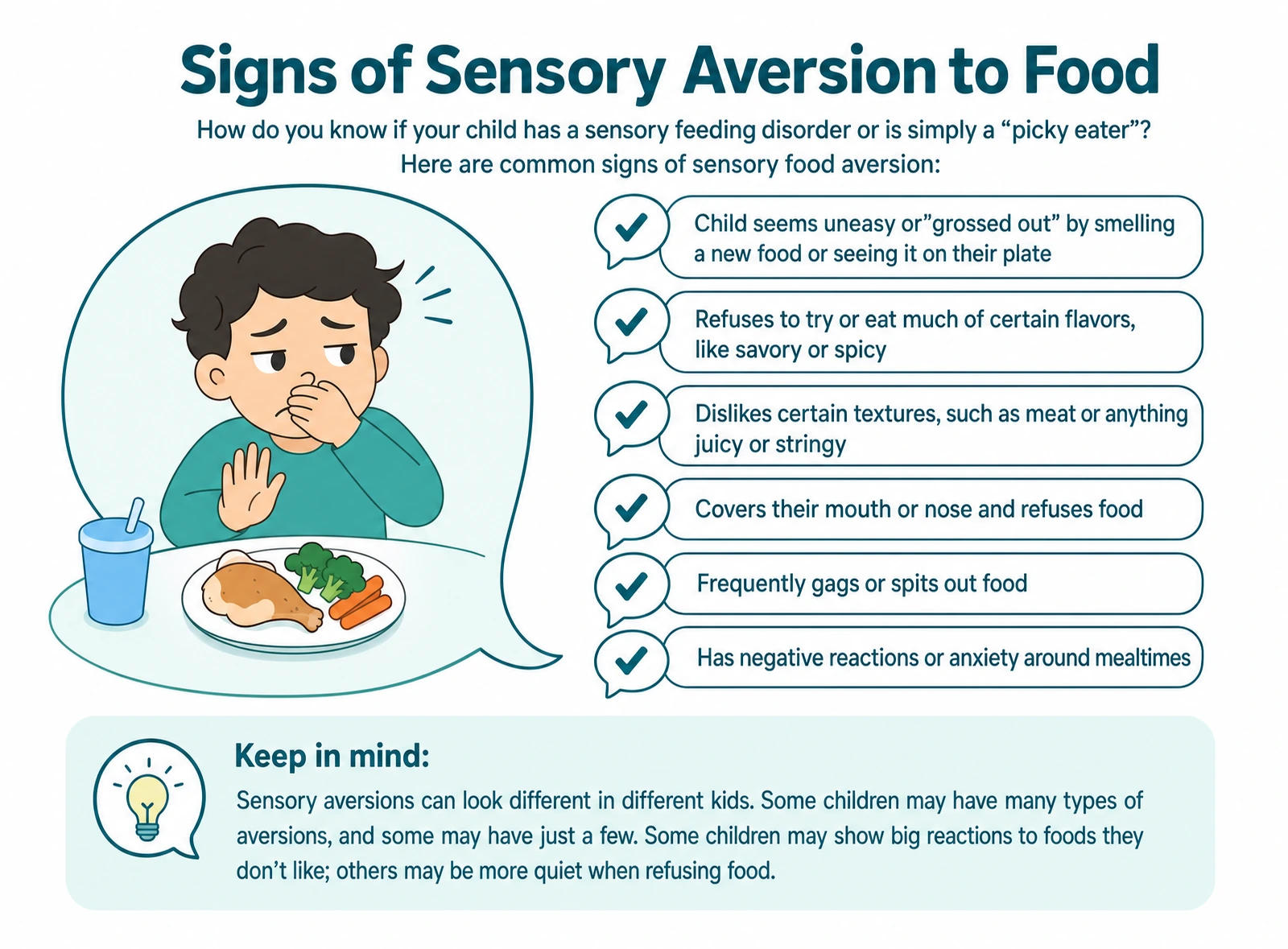
A child with sensory food aversion may show behaviors such as:
- Appearing grossed out when looking at a new food on their plate
- Becoming uneasy because of the smell of a new food
- Refusing flavors such as savory or spicy foods
- Disliking certain textures, including the texture of meat or anything juicy or stringy, such as fruits or vegetables
Some children have big reactions to foods they dislike, while others refuse them more quietly.
Reactions can be strong and noticeable, or a child may simply refuse food without much fuss. Regardless of the severity, children need to be able to eat a variety of foods and get enough nutrition. Recognizing these signs can help you determine whether your child might benefit from seeing a feeding therapist.
Other signs of sensory aversion in children include:
- Gagging frequently
- Covering the mouth or nose and refusing to eat
- Spitting food out
- Showing negative reactions or anxiety around eating and mealtimes
At what age can children develop sensory aversions?
Sensory aversion to food can begin at any time. For some children, it appears to be present from birth. They may struggle to drink from a bottle, then have greater difficulty when they begin eating food.
In other cases, food aversions seem to develop at a later age. Whenever your child begins showing sensory aversions, it is important to consult a speech therapist who specializes in feeding, also called a feeding therapist. Look for a therapist who works with children who have sensory food aversion.
What is feeding therapy?
Pediatric feeding therapy supports children who have difficulty with the physical act of eating or swallowing. It can help make mealtimes easier and more enjoyable.
Feeding therapy for children is provided by a speech-language pathologist, also known as a speech or feeding therapist, who specializes in this area. The therapist helps the child improve their ability to safely eat the least restrictive diet possible, meaning as many foods and liquids as they can safely manage.
How does feeding therapy address sensory food aversion?
Feeding therapy generally begins with an evaluation by a feeding therapist. During that evaluation, the therapist observes:
- How your child responds to different foods and liquids, and how much they consume
- Their oral motor skills, meaning their ability to move the tongue, teeth, and jaw with the strength and range of motion needed to chew and manage food and liquid
- Any signs or symptoms of aspiration, which occurs when food or liquid enters the airway
Many children have sensory aversions without oral motor difficulties or a risk of aspiration. In these situations, therapy focuses on building the child’s tolerance of and willingness to try new foods.
The speech therapist will develop a treatment plan with specific goals for therapy. “Goals may include increasing the child’s tolerance of the textures, tastes, sights, or smells of the foods that give them difficulty,” Ganjam says. After observing the child’s reactions and aversions, the feeding therapist will decide how to gradually build their tolerance.
What happens during feeding therapy for sensory food aversion?
Feeding therapy may sometimes feel uncomfortable for children because they are being asked to try unfamiliar tasks. However, it should never be distressing. The feeding therapist will closely monitor your child and make sure each activity is at an appropriate level.
1. Therapy may begin with special tools, such as a textured brush or vibrating brush
These tools may be used inside the mouth to help “wake up” the mouth and prepare it to taste or try new foods.
2. The child may look at, smell, and talk about the food
Before tasting begins, therapy often gives children new ways to experience and interact with food. For a child with sensory aversions, tasting a food immediately is often too much, too soon. “We may simply place the food on the table. The child’s task may be to look at the food, then talk about what it looks like and what color it is,” Ganjam explains. The child may then move on to smelling the food and discussing its smell.
3. The child may touch the food and begin “food play”
Food play is an important part of feeding therapy. The speech therapist gives the child different activities to complete with food, such as painting with a puréed food or using broccoli and vegetable dip to make stamps on paper. The activity can be anything the child finds fun that also helps them become more comfortable interacting with the food. Ganjam notes that greater familiarity can make food feel less frightening and help reduce aversions.
4. When the child is ready, they begin tasting the food
Some children need to move slowly, first touching the food to their lips, then to their teeth, and only later beginning to taste it or take a bite.
Once the child starts tasting new foods, the speech therapist helps them gradually increase how much they can eat. The therapist also teaches the parent or caregiver how to introduce the food at home. Some children eat a new food during therapy but will not yet eat it at home. When the speech therapist says the child is ready, practicing with that food at home is a major step in the feeding therapy process. Your child’s feeding therapist will guide you through this stage.
Related guides







Can feeding therapy be provided online?
Some types of feeding therapy can be provided through teletherapy, but others cannot. Your child’s pediatrician and feeding therapist should make this decision. A feeding therapist may need to be physically present to assess the child’s oral motor and swallowing abilities with the foods and liquids offered.
In many cases, children without known airway safety concerns may be able to receive feeding therapy online.
Many children without known airway safety concerns can receive online therapy. This requires planning and communication between the speech therapist and the parent or caregiver. The therapist will ask the family to bring specific foods to the session, then guide the child and caregiver through exercises using each food.
Whatever goals the child is working toward, and whether therapy takes place online or in person, it is extremely important for the parent or caregiver to be involved. This involvement helps the caregiver learn what to do at home to reinforce the skills the child is learning in therapy.
How long does feeding therapy take for sensory food aversion?
Every child progresses at a different pace. Some move through the steps of feeding therapy quickly, while others need more time. “It’s not uncommon for a child to work on a specific level for a few therapy sessions before being ready to progress to the next level,” Ganjam says.
Be patient with the work your child is doing, and celebrate each new goal they reach. When addressing sensory food aversions, no achievement is too small.
Take the next step
- Take our free screener to see whether your child would benefit from a feeding evaluation
- Learn more about the signs of sensory food aversion
- Get matched with a licensed feeding therapist at Astrel
By observing and supporting your child at mealtimes, you are already doing important work. Let us help you guide them as they explore new foods, build confidence at the table, and enjoy a wider variety of healthy meals.
Frequently asked questions
What is an example of a sensory issue with food?
Sensory issues with food vary from person to person. Some children react negatively to mixed textures, such as vegetables in soup. Others may dislike crunchy foods such as crackers or the juicy texture of fruit.
Can a child have food aversions without being autistic?
Sensory food aversion does not mean that a child is autistic. However, sensory feeding disorders often occur in children who are autistic or otherwise neurodivergent.
Do children with ADHD have sensory issues with food?
Yes. Selective eating and sensory aversion are common among children with neurodevelopmental conditions such as ADHD.
How are sensory issues with food treated?
Feeding therapy can help expand the variety of foods in a child’s diet. Therapy goals may include increasing the child’s tolerance of difficult textures, tastes, sights, smells, or temperatures. Through a step-by-step process, children can become more familiar and comfortable with different foods.
How can you tell if your child needs feeding therapy?
If your child consistently avoids certain foods, reacts strongly to smells or textures, or eats a very limited diet, they may benefit from feeding therapy. A feeding therapist can assess their needs and create an individualized plan to help them gradually try new foods.
What happens in feeding therapy for sensory food aversion?
Therapy typically begins with an evaluation of the child’s eating behaviors, oral motor skills, and responses to food. Feeding therapy uses gradual, step-by-step exposure to new foods. With guidance from a feeding therapist, children may look at, smell, touch, and eventually taste each food. Therapy is fun and safe, with the goal of reducing fear while building comfort with food.